Restauration historique de l'école Altstädter par Otto Haesler, Celle, Allemagne
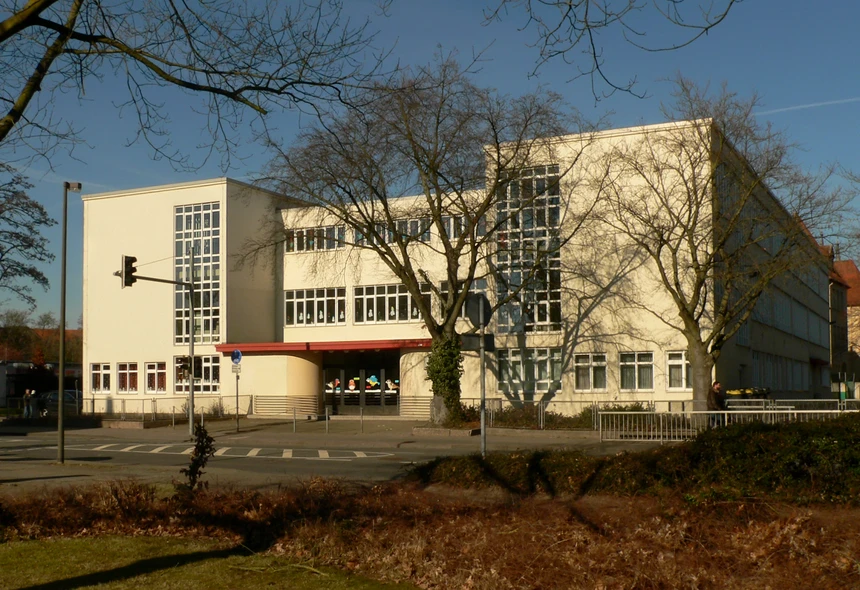
The city of Celle has initiated the restoration of the Altstädter School designed by Otto Haesler in accordance with preservation guidelines for listed buildings. The building was analyzed and a concept was developed in collaboration with the architects and various specialists with the goal of preserving as much of the original structure as possible and upgrading the building for the future with as little intervention as possible.
Wooden box windows, as originally installed, are an essential part of the restoration and the energy concept of the “Glass School.” They realize the idea of the Bauhaus movement to bring more light into buildings without the problems of single glazing and steel frames with cold surfaces and condensation. However, the school's original windows were “modernized” in the 1970s/1980s. Wooden box windows restore much of the building's identity, as the windows dominate the façade of the Altstädter School and are itstrademark. Before the renovation began, the building underwent a prototype energy assessment. With funding from the German Federal Environmental Foundation, a classroom on the second floor on the west facade was fitted with new box windows. Transsolar worked with the architects at Spital-Frenking Schwarz to develop a concept based on Otto Haessler's original design, further developing the facade. Over the course of a year, they measured the room and compared it with an existing room.
A refined box window with minimized double glazing on the inside and single glazing on the outside allows glare and sun protection to be installed in the space between the panes, shielded from wind and weather. This allows the box window to use the heat from solar radiation, the solar gains, to pre-temper the supply air in winter, as the rays on the sun/glare protection create a heat cushion in the space between. By opening a lower sash on the outer glazing and an upper sash on the inner glazing, preheated fresh air flows into the classroom. To ensure sufficient airflow, the closed sun protection must include appropriate openings at the top and bottom.
Although one-sided window ventilation with supply and exhaust air via the box window reduces ventilation efficiency, it allows fresh air to be preheated in the winter setting. This means that even at outside temperatures of 0°C, draft-free, natural ventilation is possible, as measurements have shown. For summer ventilation, the sashes are opened inward in addition at the lower section, allowing outside air to flow directly into the room without being overheated by the solar gains. Even with the outer sashes open, no noticeable heat build-up occurs inside. The roller blind material has slight transparency, maintaining a visual connection to the outdoors even when closed. Additionally, a low-e coating on both sides of the sun protection helps reduce heat loss through transmission during winter nights when the blinds remain closed.
The roller blinds are controlled automatically, closing only when direct sunlight strikes the relevant façade—or manually if needed. Daylight can still enter the room even with the sun protection closed, especially when combined with light-colored ceiling paint.
A CO2 traffic light in the classroom indicates when carbon dioxide levels are too high and ventilation is required. With CO2-dependent damper control, a classroom with a typical occupancy of 20 students and one teacher maintains adequate natural ventilation, keeping CO2 levels below 1100 ppm by the end of the lesson. In winter, with reduced façade ventilation due to the closed upper outer flap, CO2 levels can rise to 1400 ppm, but intensive ventilation during breaks ensures the classroom starts the next lesson with good air quality.
Transsolar’s measurements show that the refined box window carries Otto Haesler’s idea of abundant daylight combined with high comfort into the realm of ventilation. It enables effective pre-conditioning of the supply air in winter and ensures comfortable indoor temperatures throughout the year.
