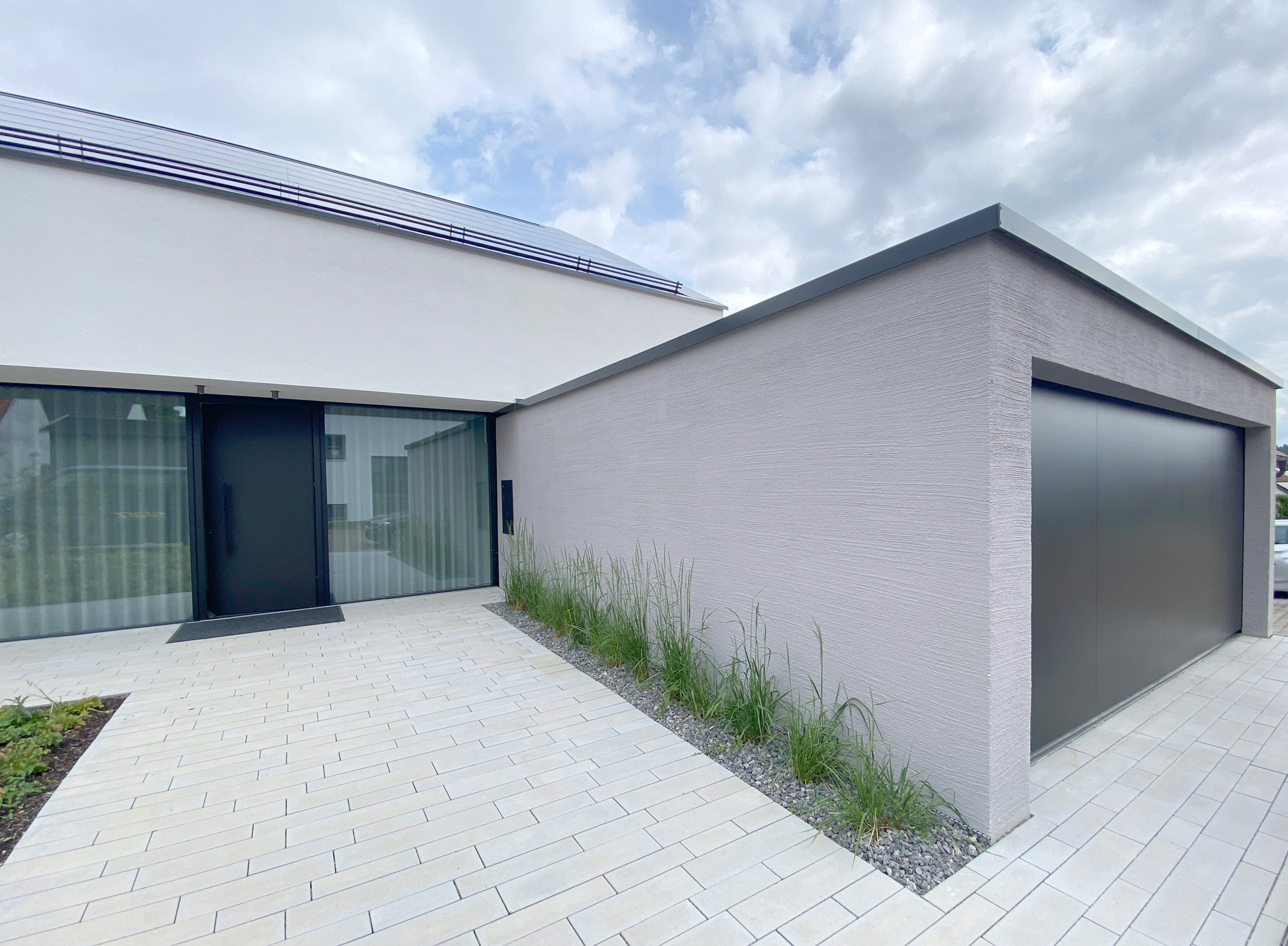
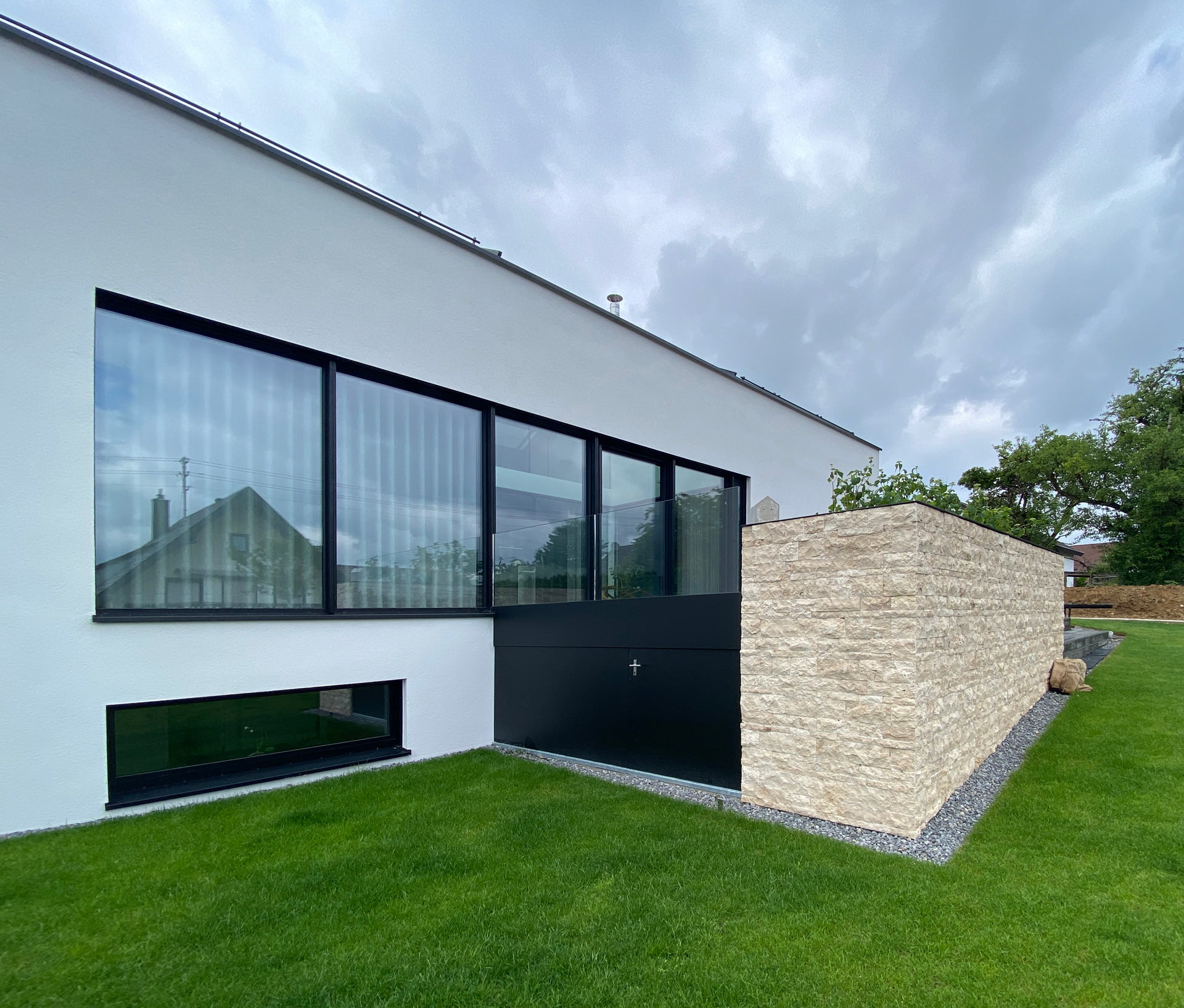
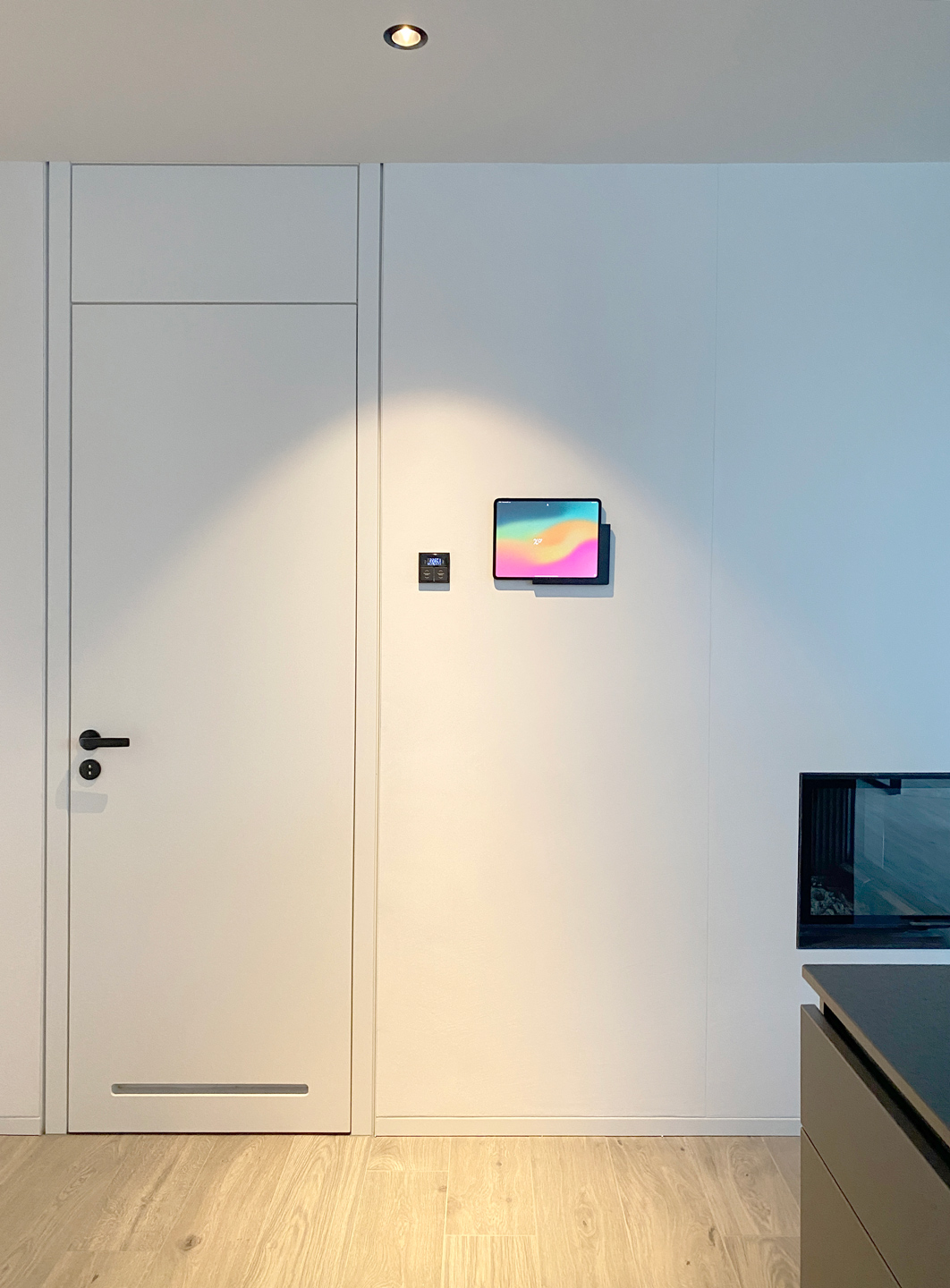
Plus-Energy Single-Family Home, Welzheim - Breitenfürst, Germany
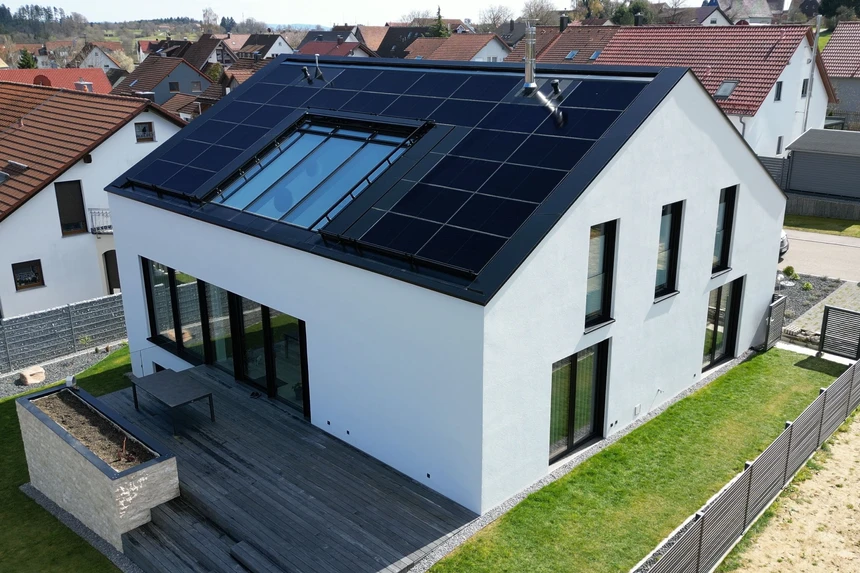
The project aims to realize a single-family residence that operates at least climate-neutral while ensuring a high level of thermal comfort throughout the year.
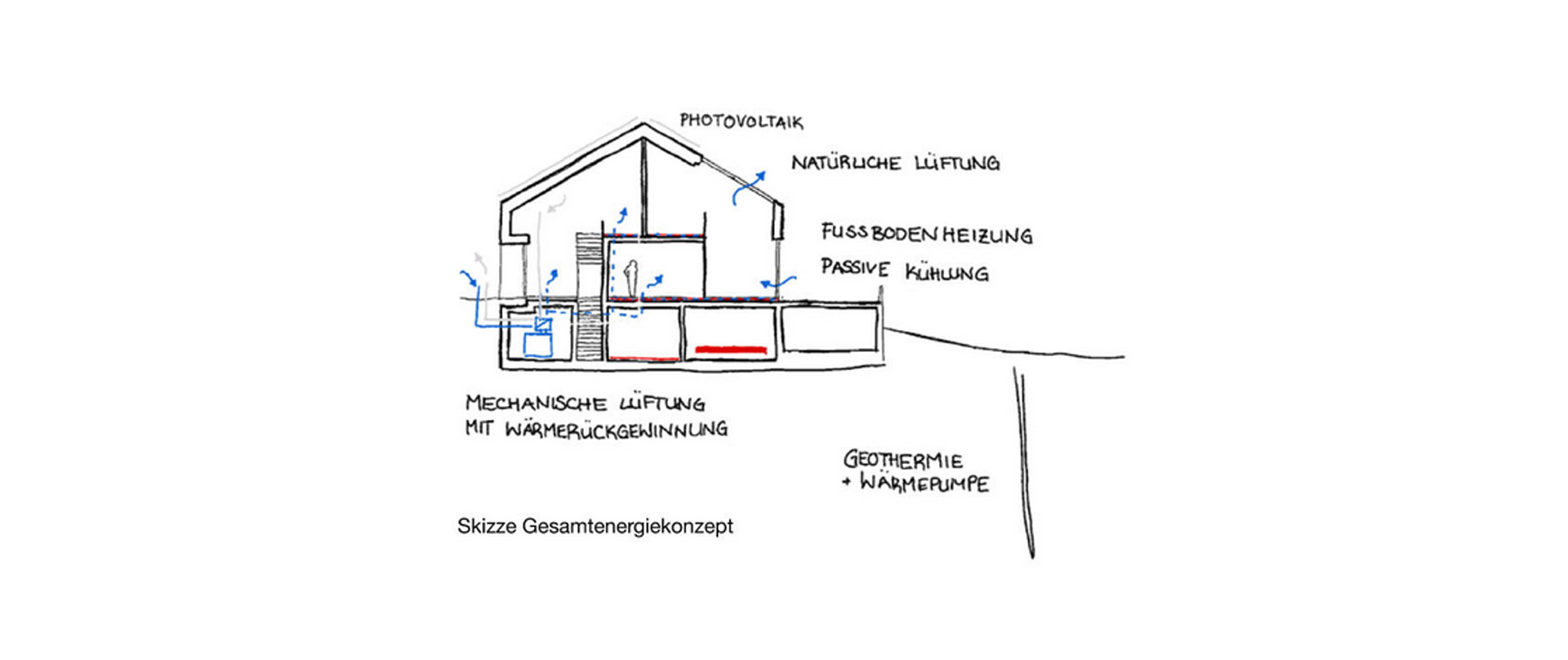
The energy concept developed by Transsolar is based on a low-temperature system with underfloor heating in the living areas, supplied by geothermal energy. The system is designed to operate reversibly, providing both heating in winter and cooling in summer via the floor. A maximum indoor air temperature of 23 °C is targeted for the summer period. A balanced mechanical ventilation system with heat recovery ensures hygienic air exchange and supports the pre-conditioning of supply air. During cooling operation, additional dehumidification is required to prevent condensation on cooled surfaces.
To keep the cooling load as low as possible in summer, external radiation-controlled sunshades are necessary.
Energy simulations indicated that a geothermal heat pump system with 2–3 boreholes at depths of 70–100 m is sufficient to meet the building’s thermal demands. As a brine/water heat pump, it supplies heating to the floor system and basement radiators, supports air pre-conditioning, and enables passive cooling via the ground in summer.
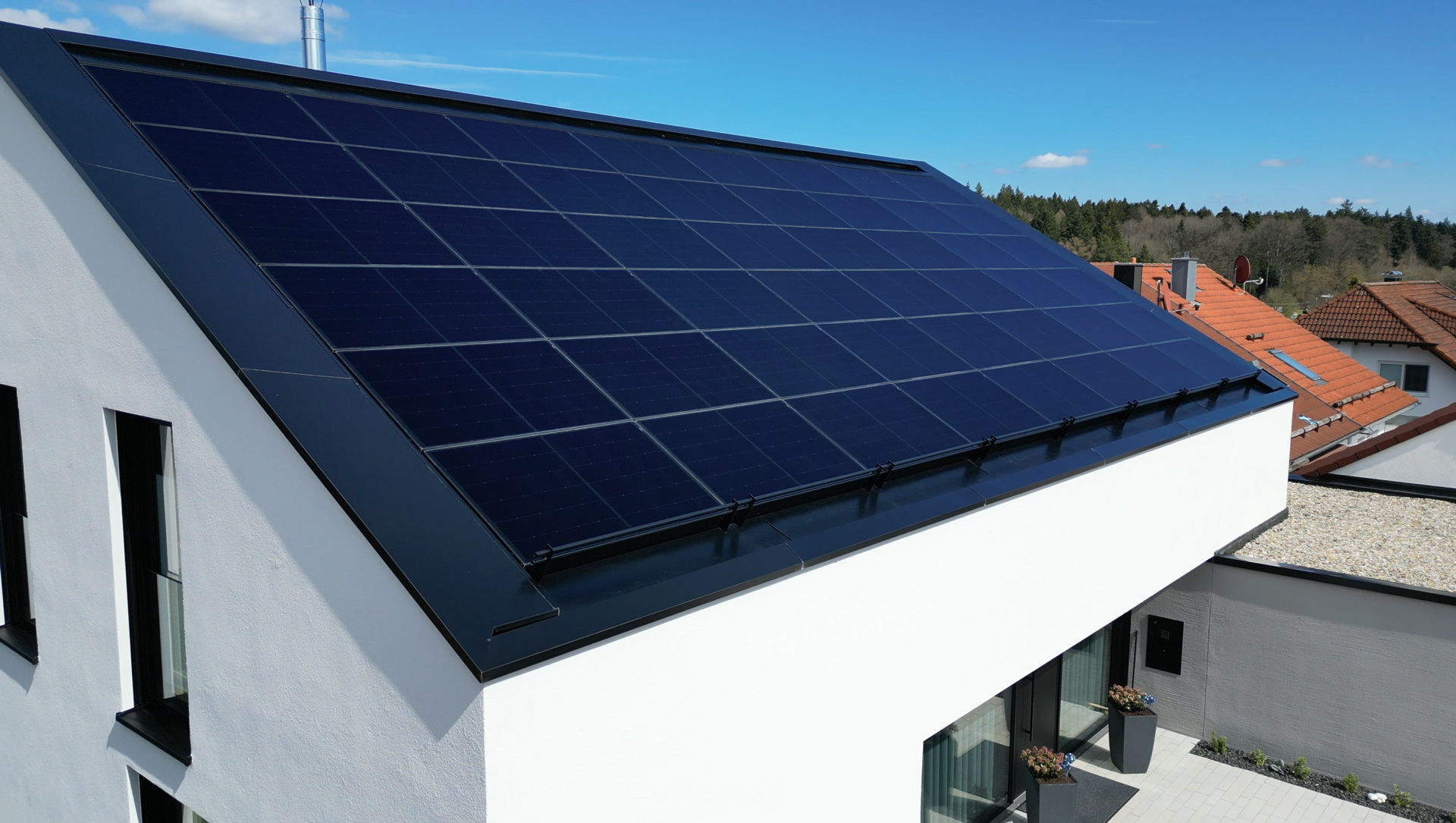
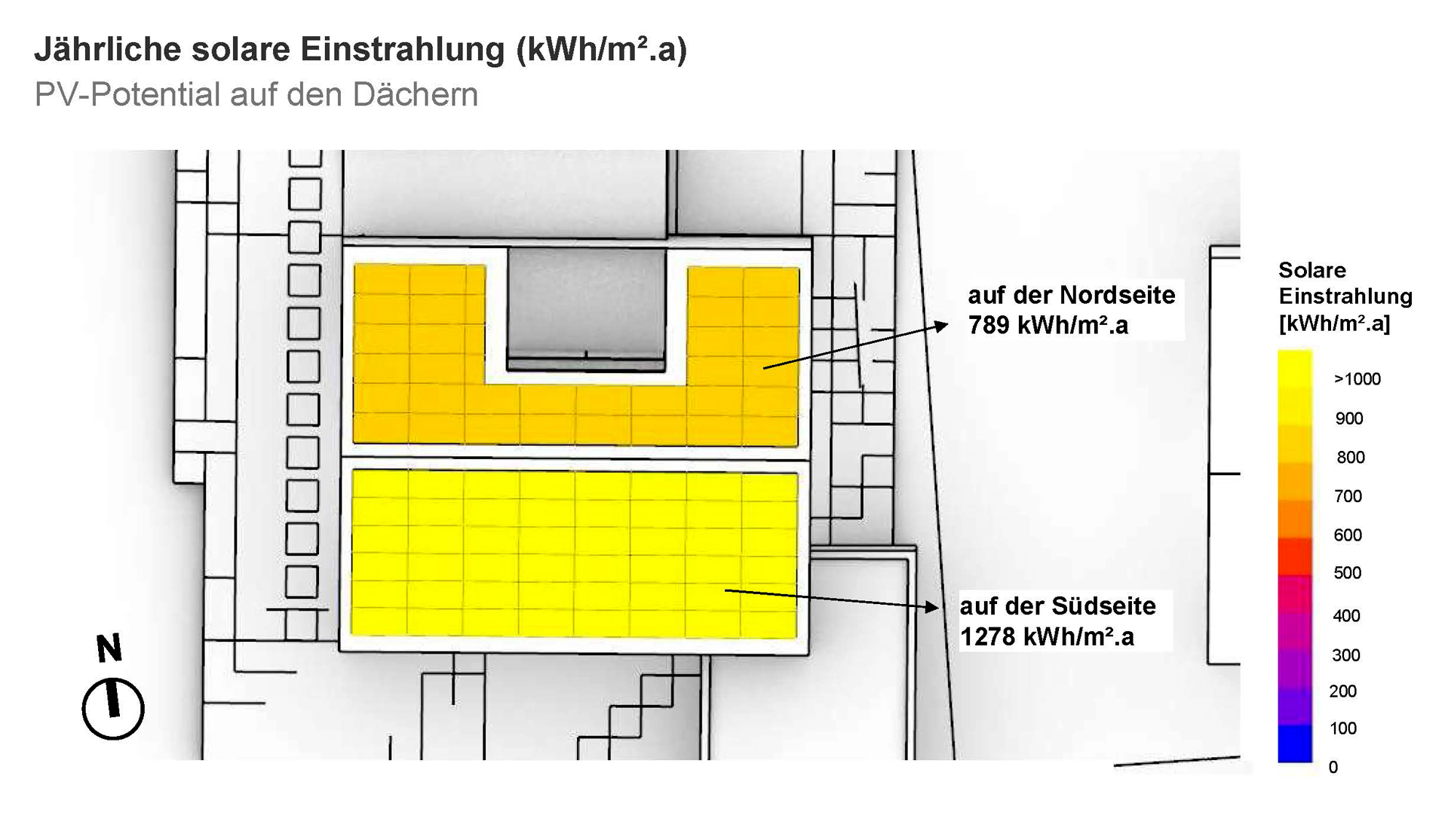
The calculated electricity demand for the building—including the heat pump, instantaneous water heater, free cooling, ventilation, appliances, lighting, sauna, and electric car—is 16.1 MWh per year. Appliances, lighting, and the sauna account for a large portion of the electricity demand. A rooftop PV system generates electricity. With a total area of 148 m² / 1,600 ft², of which 87 m² / 935 ft² is on the south side of the roof and 61 m² / 650 ft² on the north side, the system’s annual output is 29 MWh. To increase the PV system’s coverage ratio, a battery storage system is recommended that covers 50–70% of average daily electricity consumption.
The annual energy balance shows a surplus generation of roughly 13 MWh. Due to seasonal variations, a substantial portion of the electricity is generated in summer, while peak demand occurs in winter.