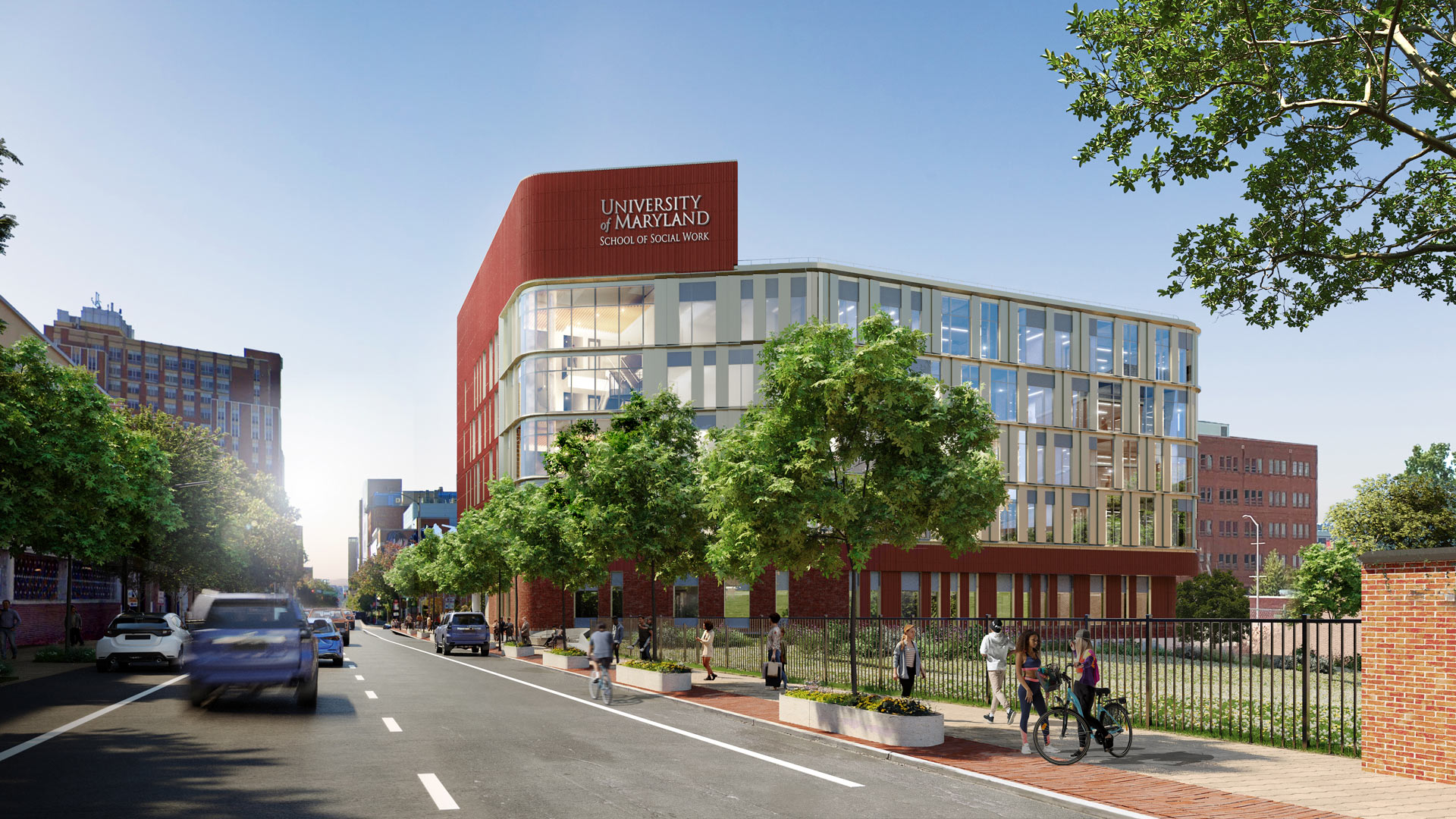
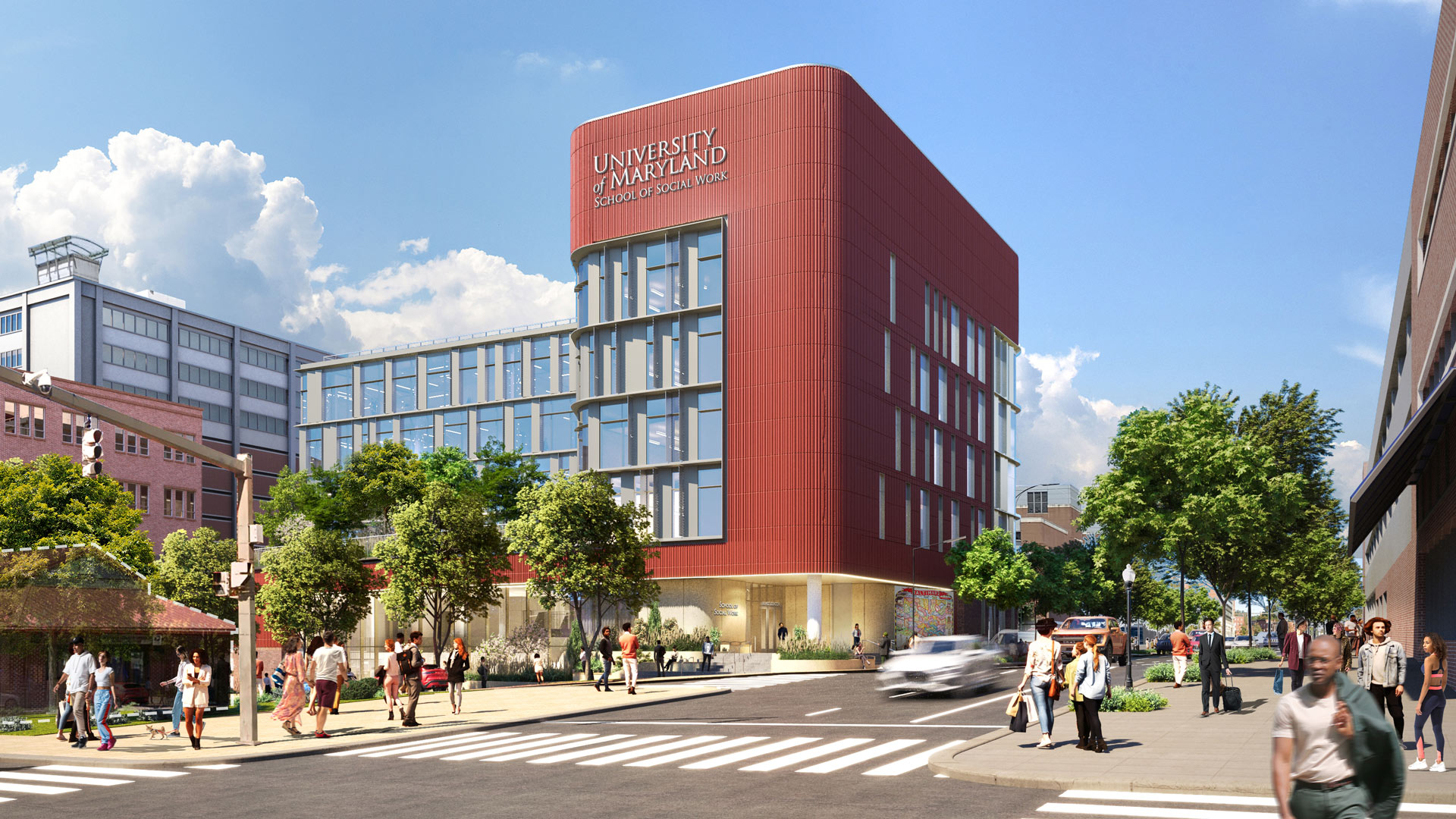
School of Social Work Building, Baltimore, MD
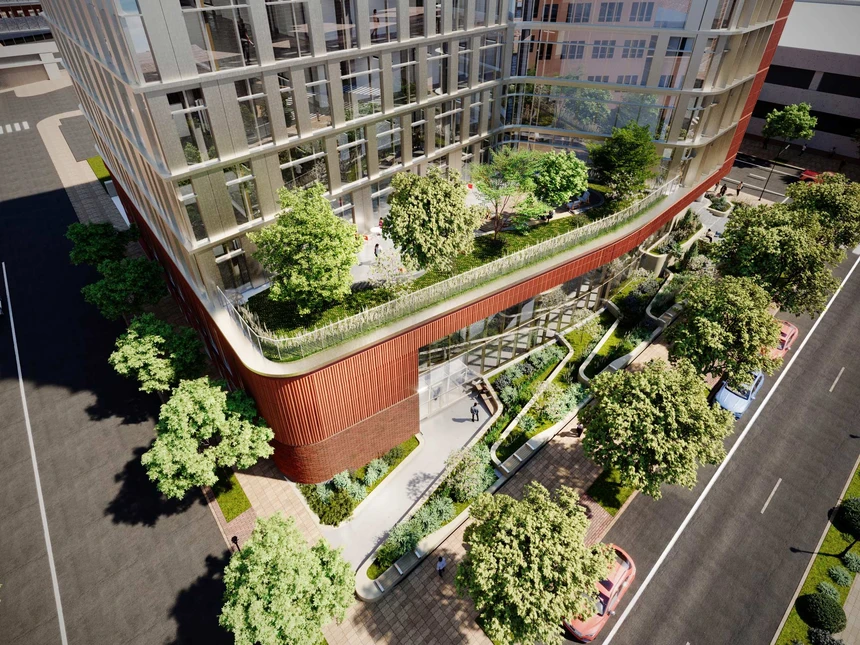
As the first net‑zero emissions building within the University System of Maryland and in downtown Baltimore, the new School of Social Work Building sets a clear benchmark for climate‑responsive higher‑education design.
The six‑story University of Maryland School of Social Work (UMSSW) building is conceived as an open and inclusive environment that supports teaching, research, and exchange while acting as a bridge between the university and the surrounding urban context. The architecture provides a diverse range of learning and gathering spaces, including contemporary teaching and research facilities, shared informal areas, a café lounge, and infrastructure for active mobility such as bike storage and showers. Particular emphasis is placed on accessibility, social openness, and long‑term spatial flexibility.
Transsolar supported the project with the development of an integrated climate and energy concept aimed at significantly reducing energy demand and operational carbon emissions. Key strategies included optimizing the building’s solar orientation, designing a high‑performance building envelope to minimize thermal loads, and decoupling ventilation from temperature conditioning to improve overall efficiency and controllability.
Heating and cooling are provided through a geothermal system that operates independently from the existing campus energy infrastructure and enables a fully electric, fossil‑fuel‑free building operation. In line with the University’s net‑zero goals, roof and façade areas were optimized for photovoltaic systems, allowing a substantial share of the building’s energy demand to be met through on‑site renewable electricity generation.
The project demonstrates how architectural quality, social functionality, and climate‑oriented engineering can be combined into a coherent, resilient whole. Sustainability is not treated as an add‑on, but as a defining design principle—integrated, comprehensible, and effective over the long term.