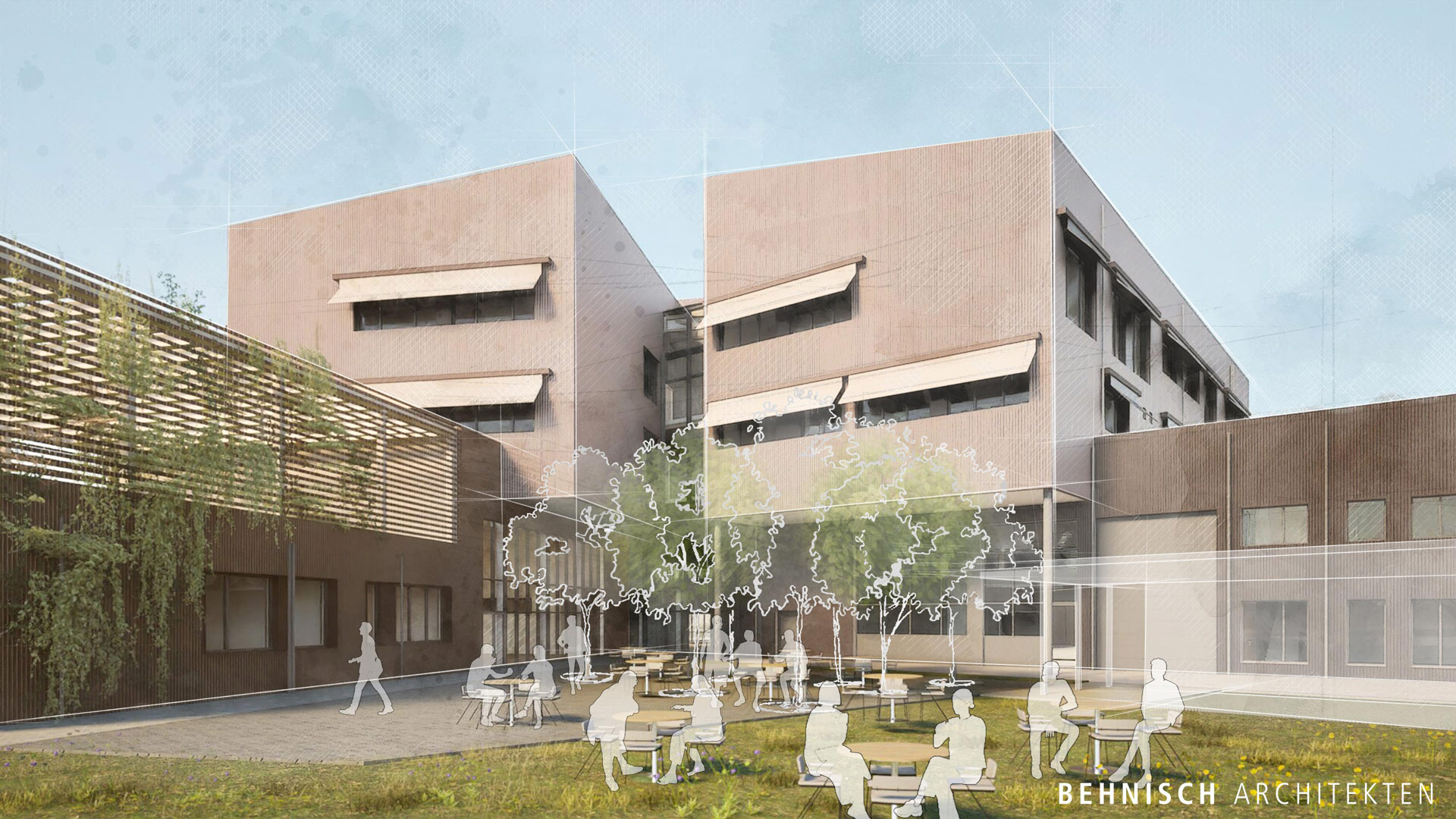
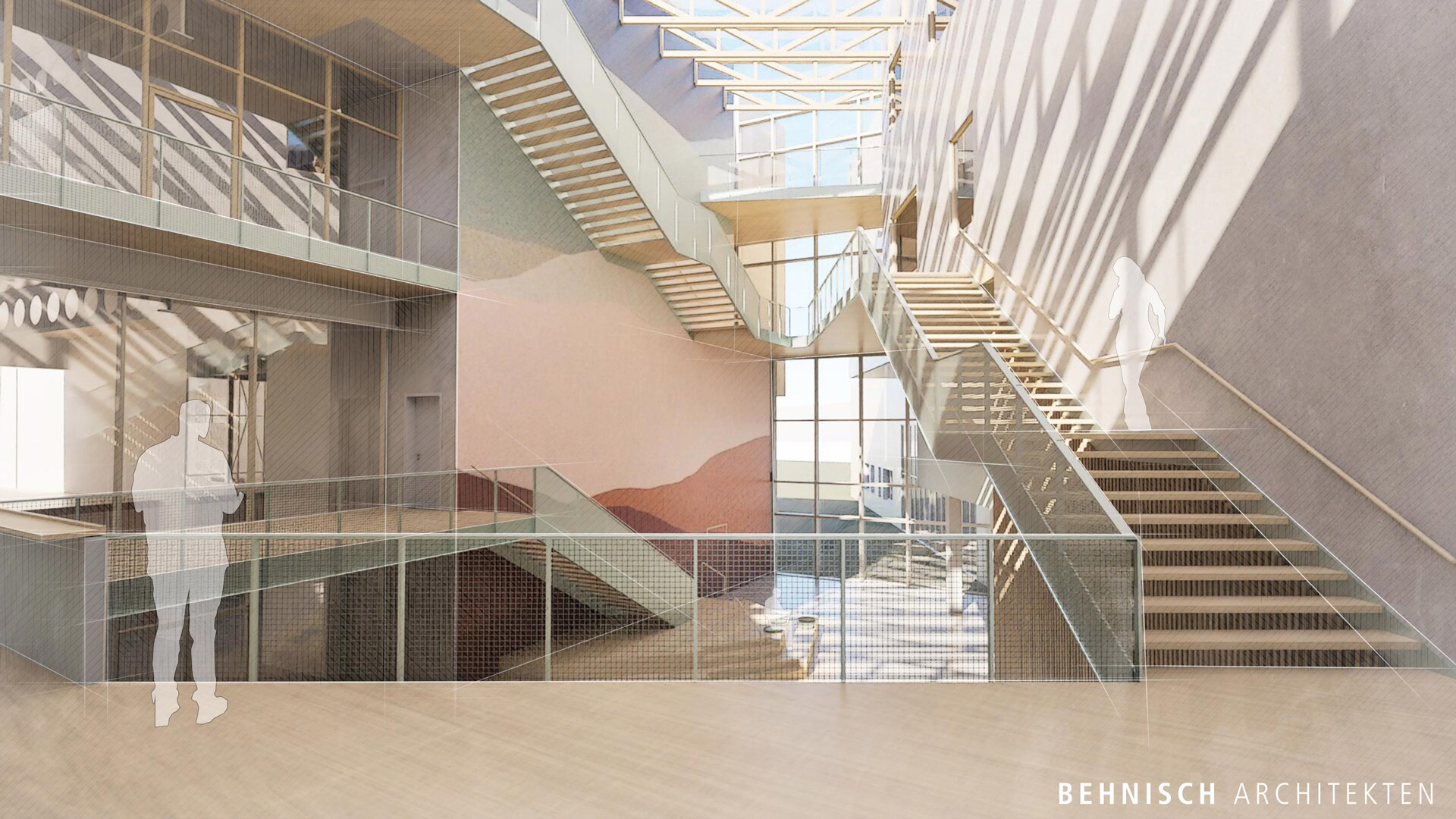
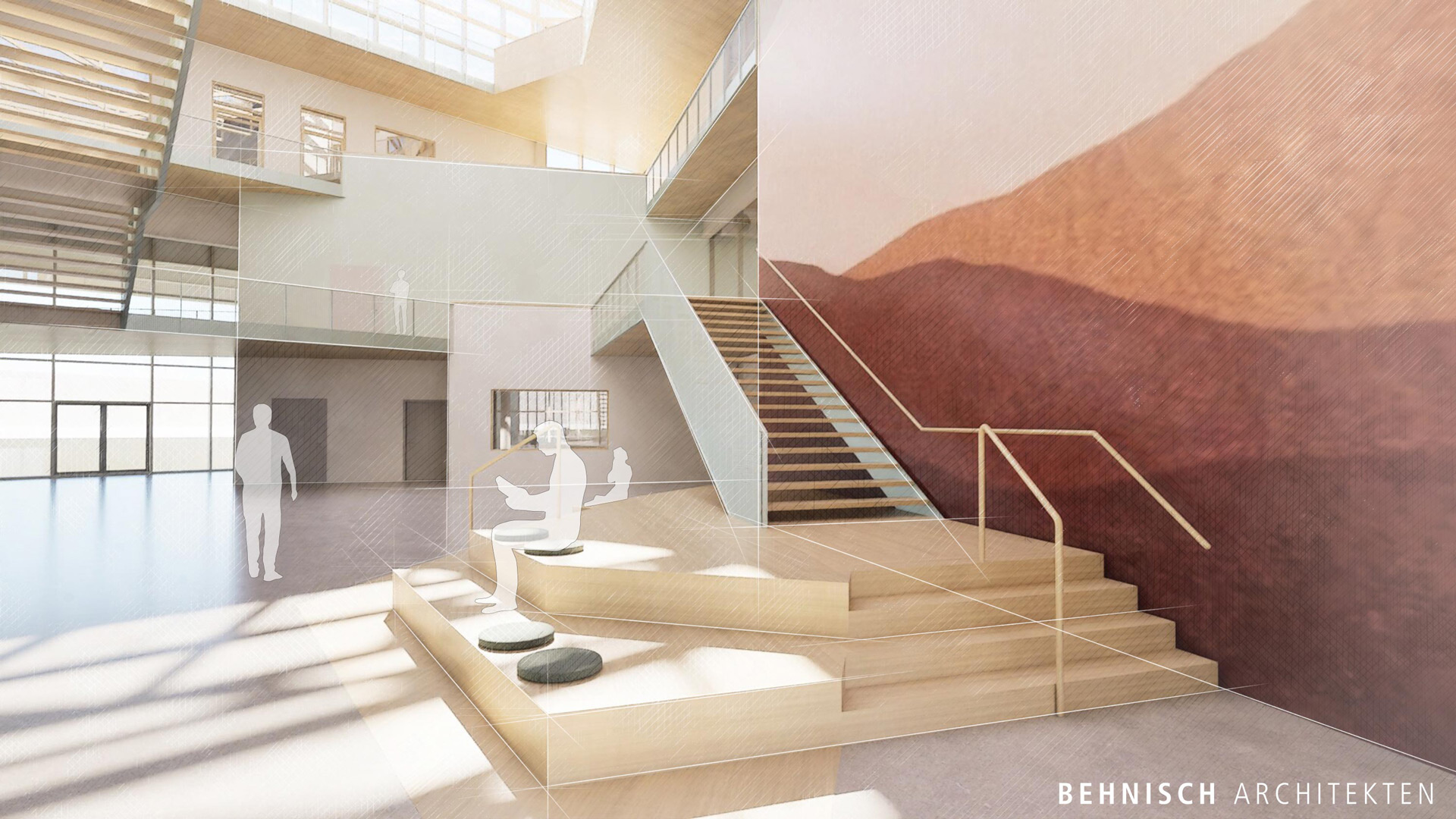
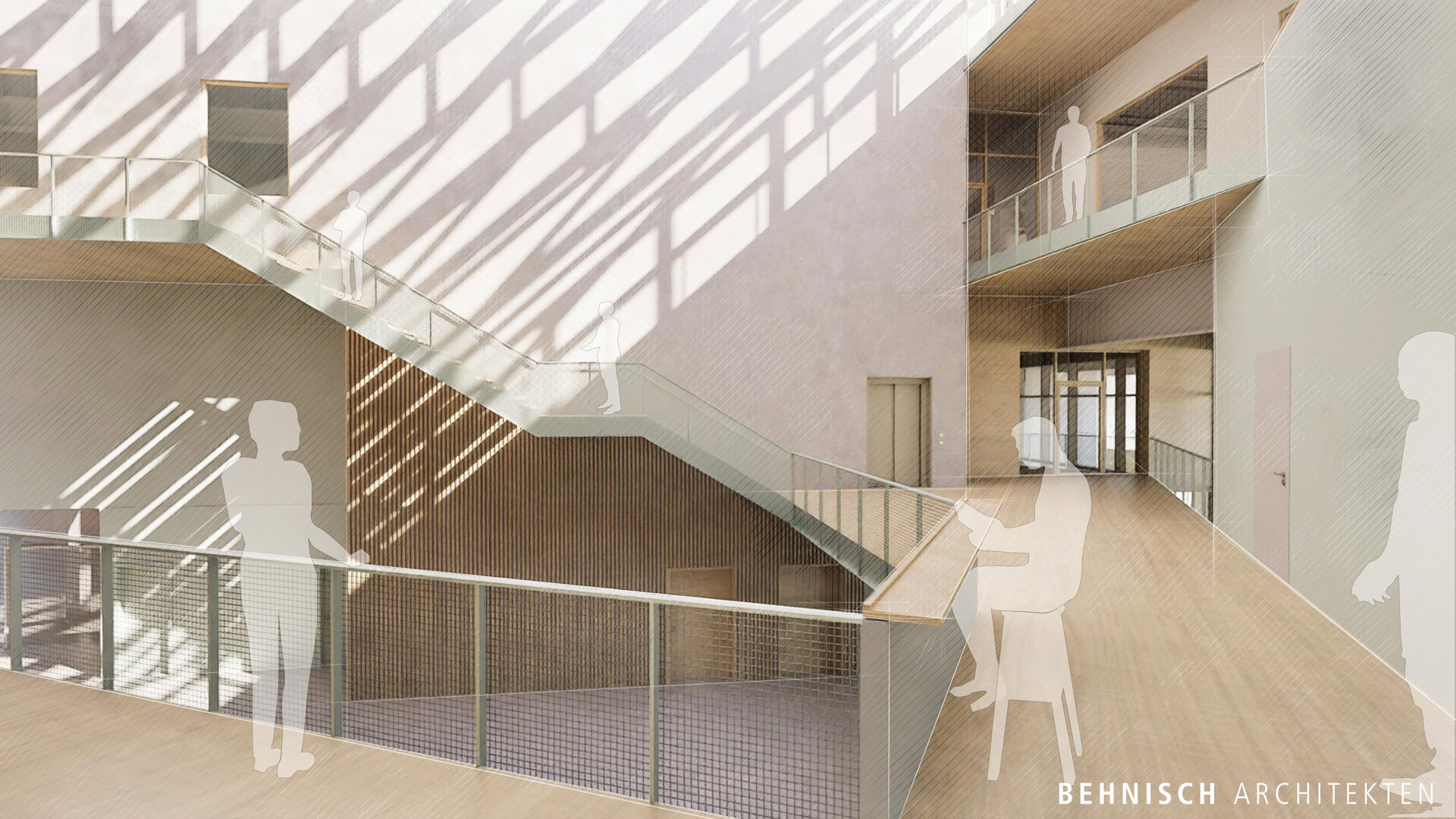
Educational Center, Landshut, Germany
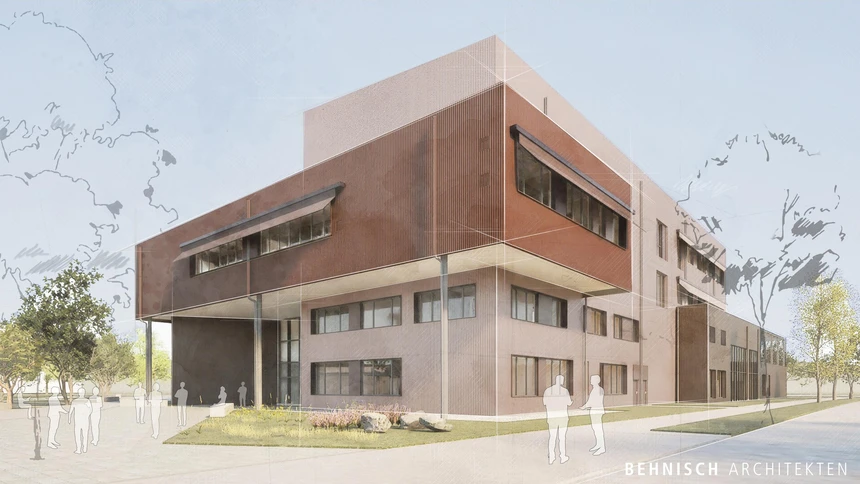
The educational center for the Landshut Handwerkskammer Niederbayern-Oberpfalz, is a new replacement building, funded as a pilot project for sustainable educational construction by the federal government. In the preliminary planning of this pilot project, Transsolar developed energy supply options in a variant study and evaluated them in terms of CO2 emissions and operating costs. The best option proved to be the groundwater heat pump, which is to be implemented. In addition to providing a temperature that only fluctuates slightly throughout the year for the efficient operation of the heat pump in heating mode, the groundwater also allows for free cooling because the existing temperature of the groundwater enables active cooling generation without energy expenditure.
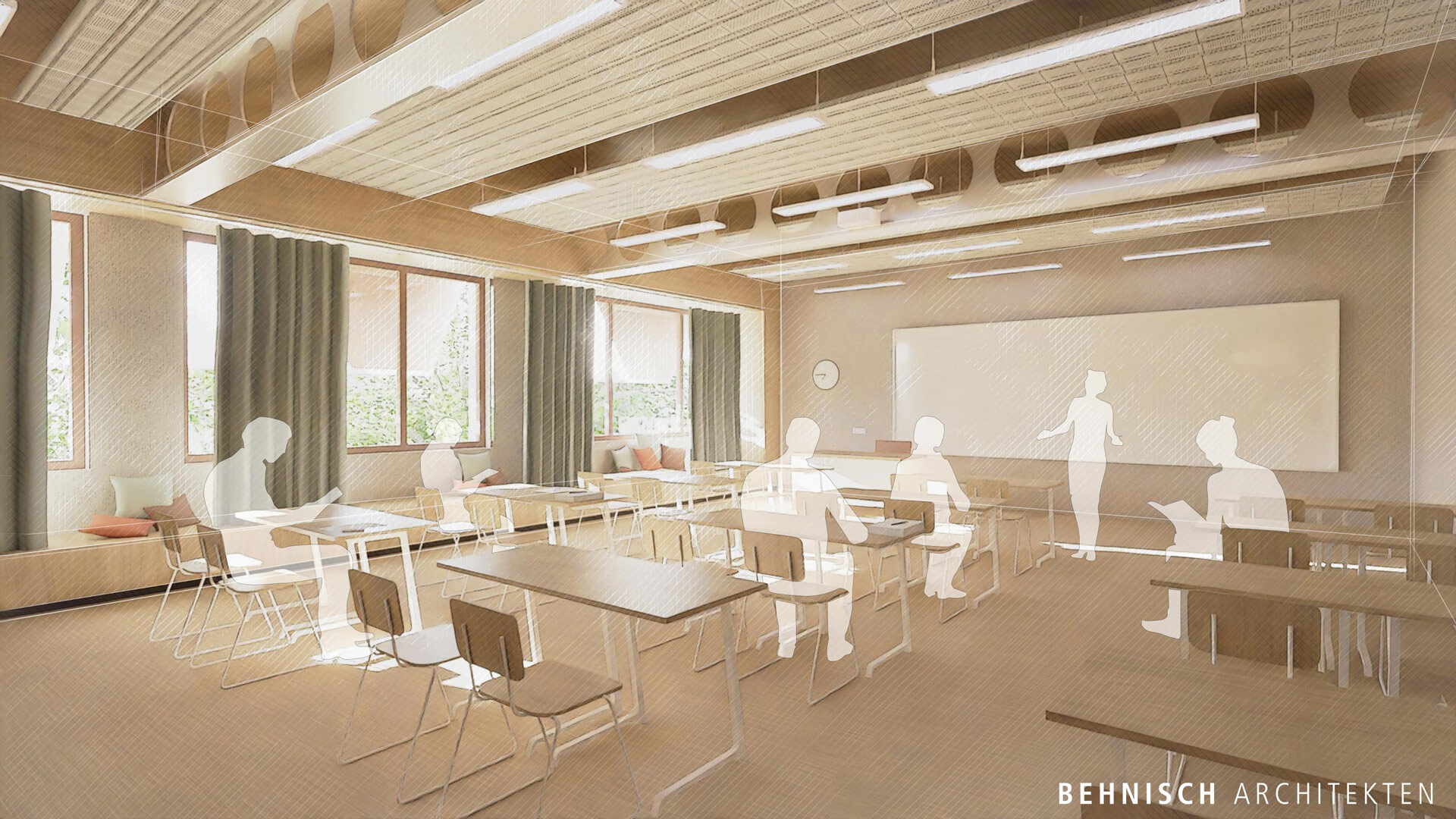
Primarily, the classrooms will receive this cooling as they require special summer thermal protection due to their wooden construction. Ceiling radiant panels are used for the transfer of heat and cold within the rooms, which are optimally aligned with the temperature levels of the heat pump and free cooling.
Due to the high occupancy density in the classrooms, very large volumes of air are required for good indoor air quality. Decentralized ventilation systems are therefore employed, which can be easily regulated according to demand, ensuring an adequate basic air exchange at all times, and operating with heat recovery.
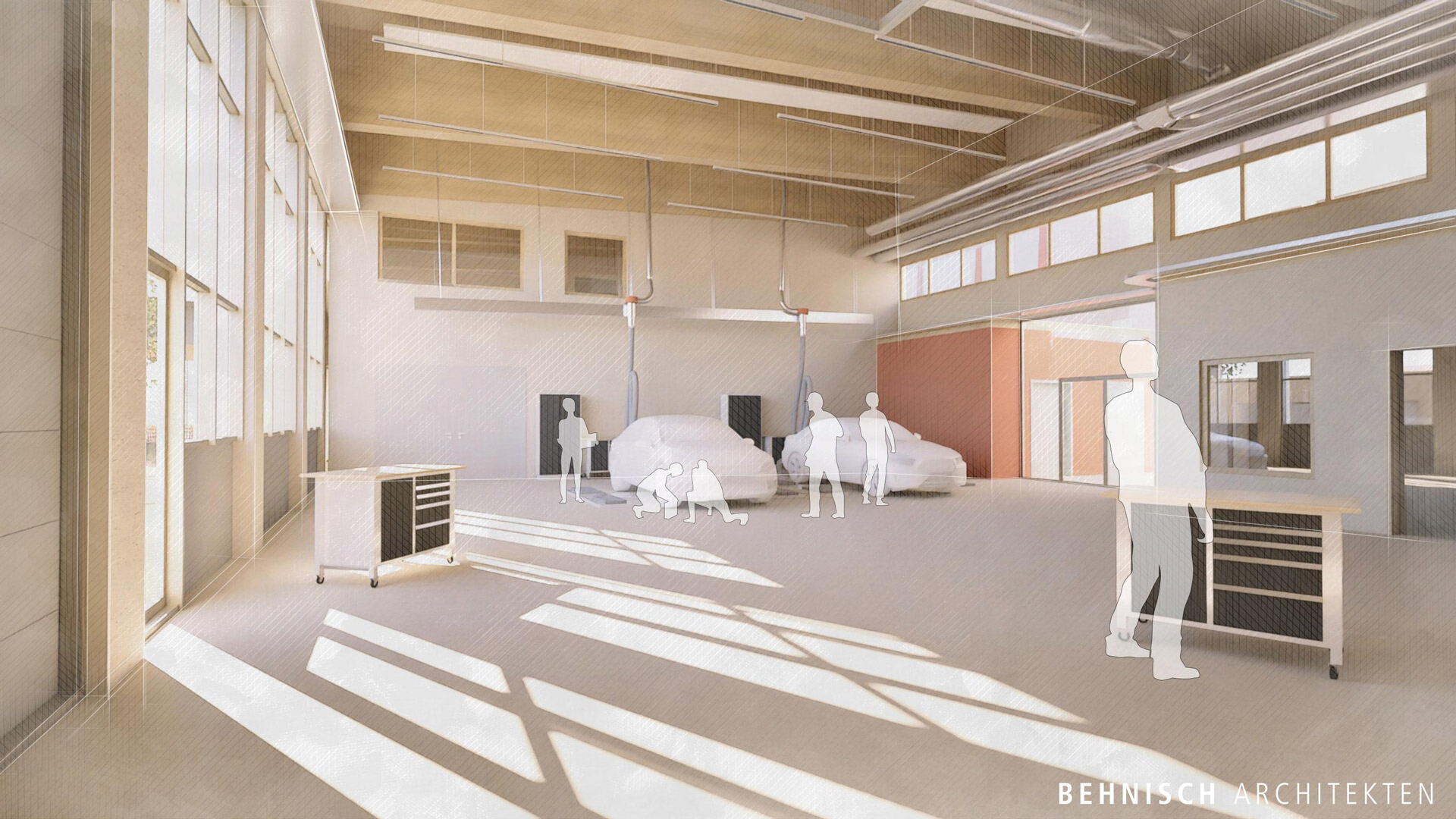
The workshops of the educational center will also be tempered using ceiling radiant panels. Welding and automotive workshops will have process heat recovery integrated into the necessary exhaust systems.
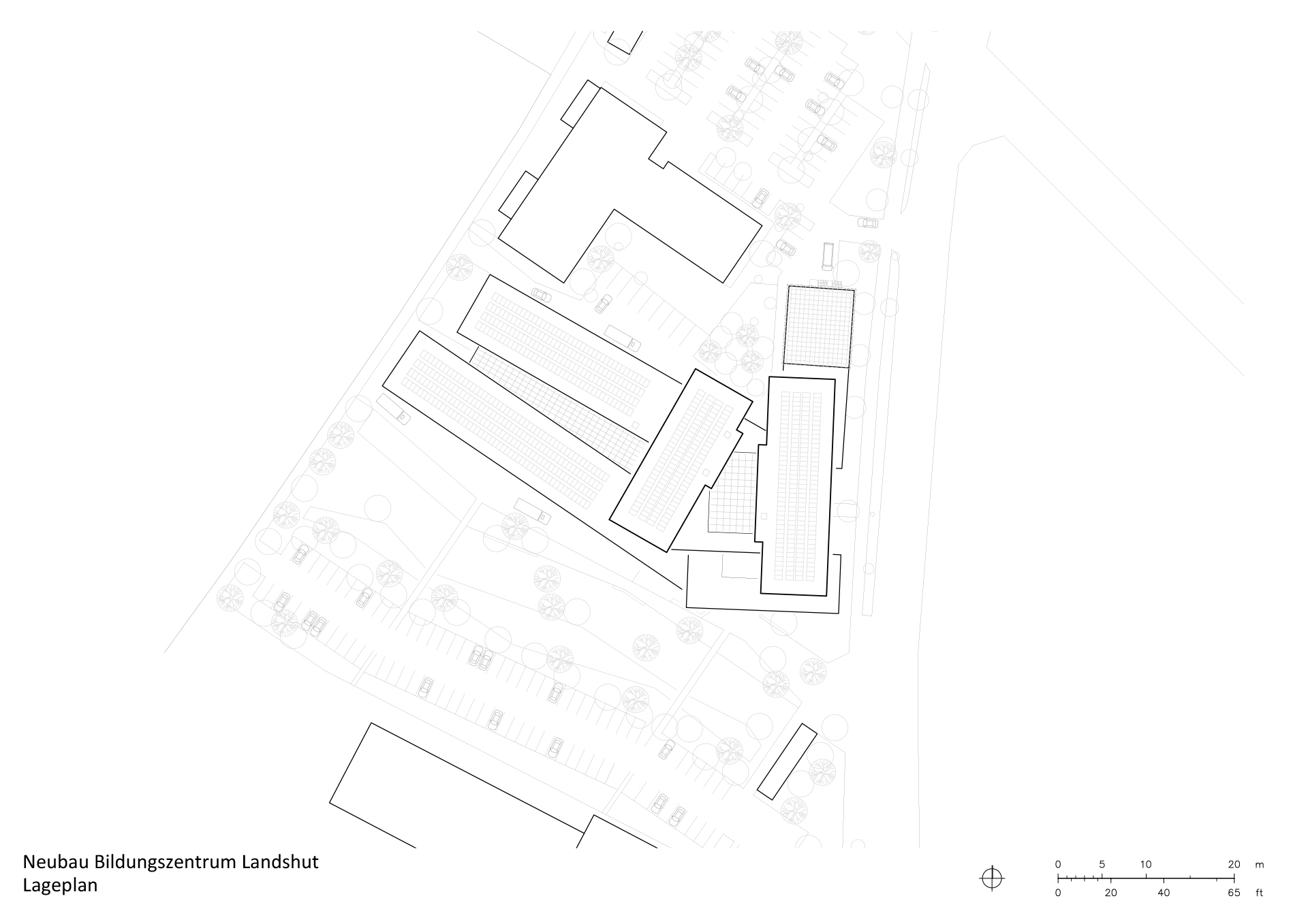
The photovoltaic (PV) system has been optimized for maximum utilization of the roof areas. This includes considerations for extensive green roofing and the permissible construction height, which is limited by possible snow loads.
Through solar radiation simulation, suitable roof surfaces were identified, and the output was calculated. Daylight simulation was used to optimize the lighting of the workshops, eliminating the need for roof skylights. This allowed for a simplification of the roof structure and maximization of the PV area. Finally, an optimal module layout was determined to maximize output on the available surfaces while simultaneously optimizing the self-consumption ratio of the PV electricity. Using the load data from the building obtained from thermal simulations and the generation profile of the photovoltaic system, an electric storage system was ideally sized.
The combination of an efficient climate concept, effective energy supply, and optimized PV system enables a net-zero energy building regarding building electricity, which encompasses heat pumps, ventilation, lighting, pumps, and controls. Additionally, part of the user electricity can be covered.