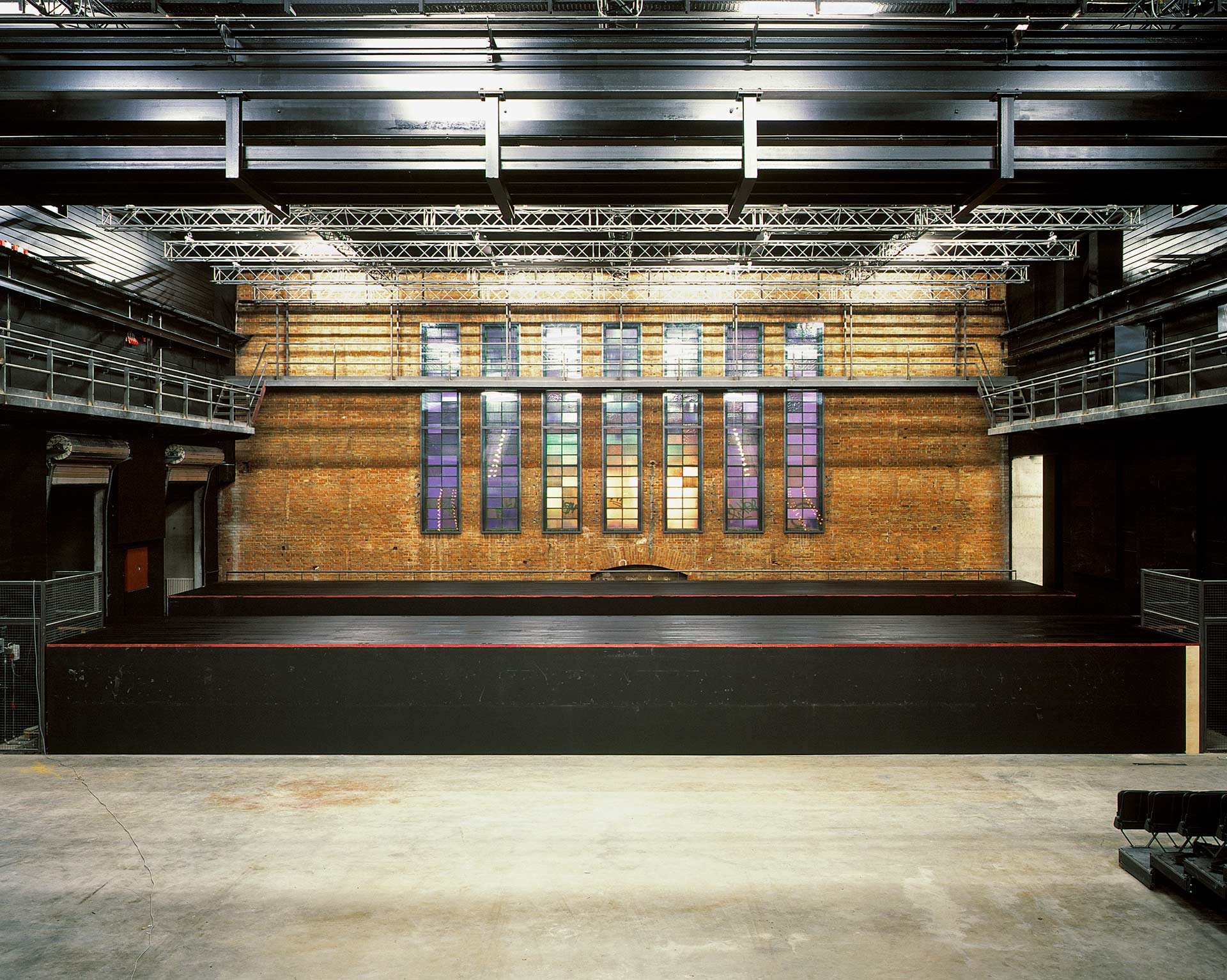
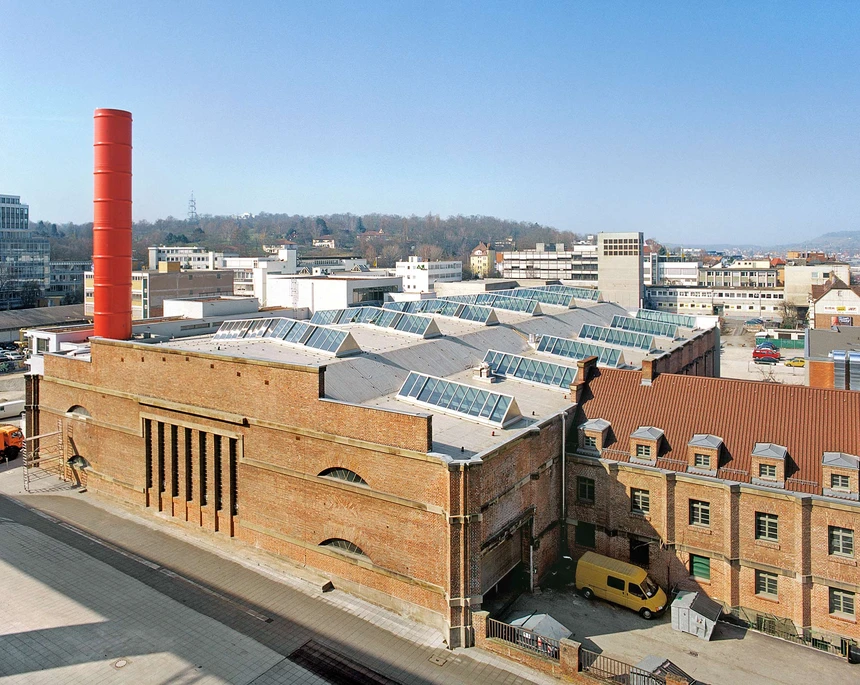
Theatrical complex “Theaterhaus”, Stuttgart, Germany
A main aim of this project was to create optimal spaces for artists. Apart from energetic and ecological criteria any impairment of the artists by noise or air draft due to air conditioning systems was to be avoided. In view of the close budget and the boundary conditions determined by the monument protection the idea of the naturally ventilated theatre was born. During the long development process of the project the concept had to be adapted due to changed boundary conditions, but still exists in its central components.
The fresh air flows to the difference halls via earth ducts under the building. The ducts have no insulation to the adjacent soil and as in a traditional cellar space this has a balancing effect on the the supply air temperature: in summertime the air is precooled, in winter preheated. Air pours with low speed into the halls, collects itself on the ground and rises up slowly as soon as it warms up. Under the hall roof the air flows over channels into the high rising exhaust chimney, driven by the stack effect, which is caused by the temperature difference between inside and outside.
In wintertime a part of the heat which is contained in the extracted air is regained and used for heating of the supply air. During weather conditions when this natural impulse conveys not enough air, fans are used in assistance, whereas these fans benefit from the little flow resistance of the ventilation system and thus only little energy has to be used for the transportation of the air. Due to budget reasons mechanical cooling was deliberately omitted in liaison with the client. The aim is to ensure good air quality; room temperature fluctuations are acceptable in a certain range. Compared to conventional solutions savings on energy demand could be realized for air promotion, heating and cooling.