Wipro Gopanpally Campus, Hyderabad, India

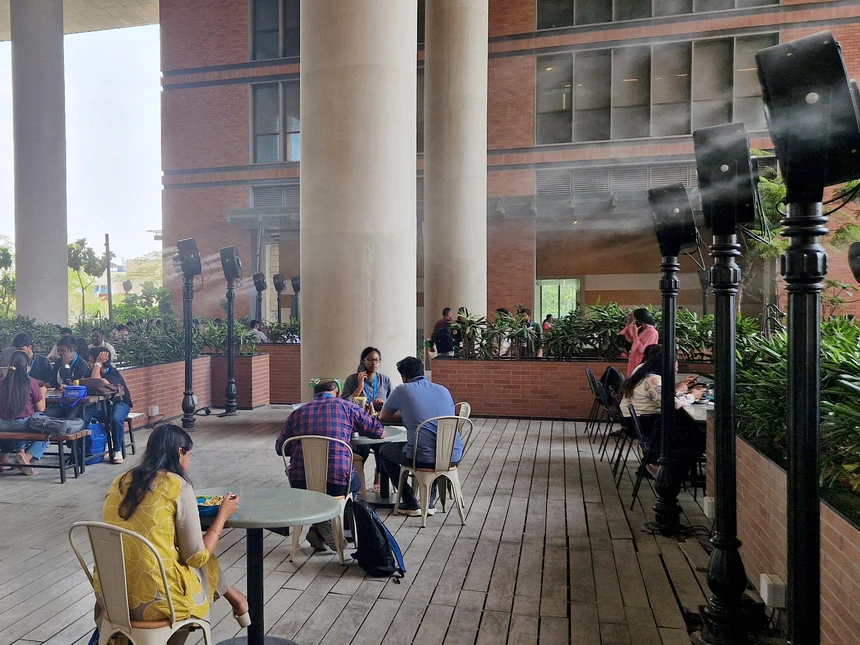
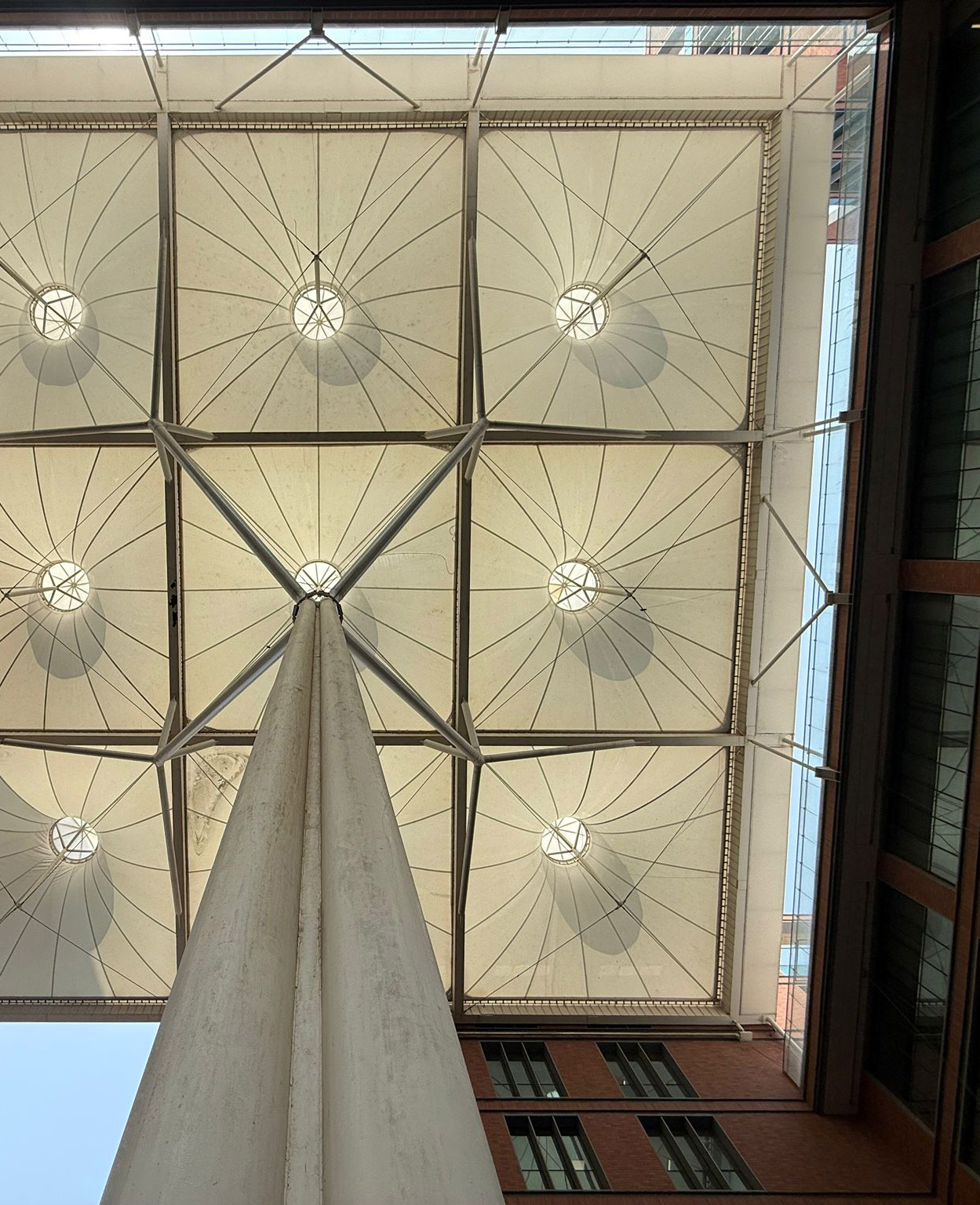
At the heart of the Gopanapally Campus in Hyderabad lies a thoughtfully designed courtyard that unites aesthetic quality with functional performance. Its organically curved canopy creates a distinctive spatial character while enhancing comfort through carefully integrated architectural measures. It is based on the principle that form follows function. Despite the resulting roof area, natural ventilation and daylight are ensured, and protection from rainfall during the monsoon season is provided.
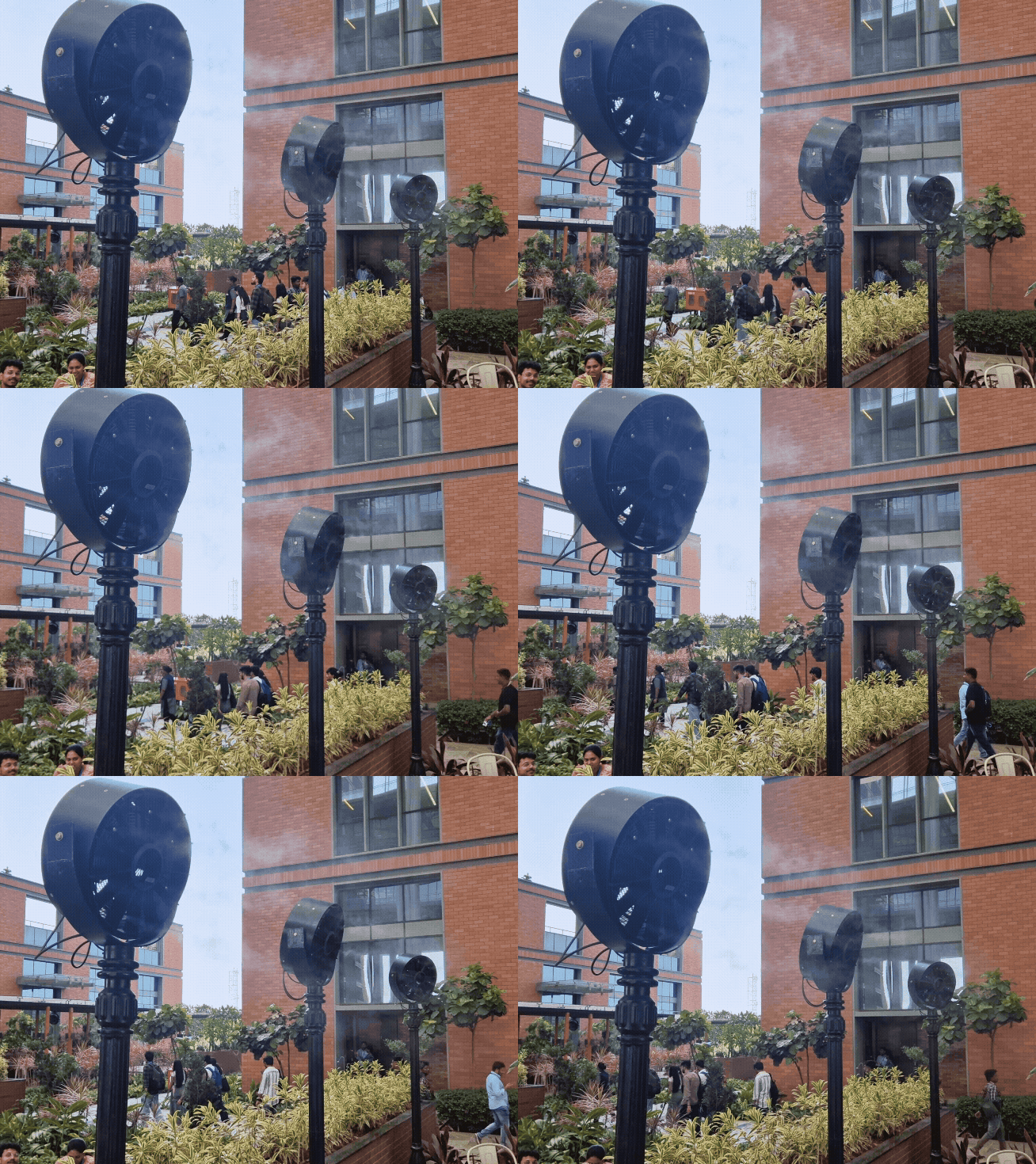
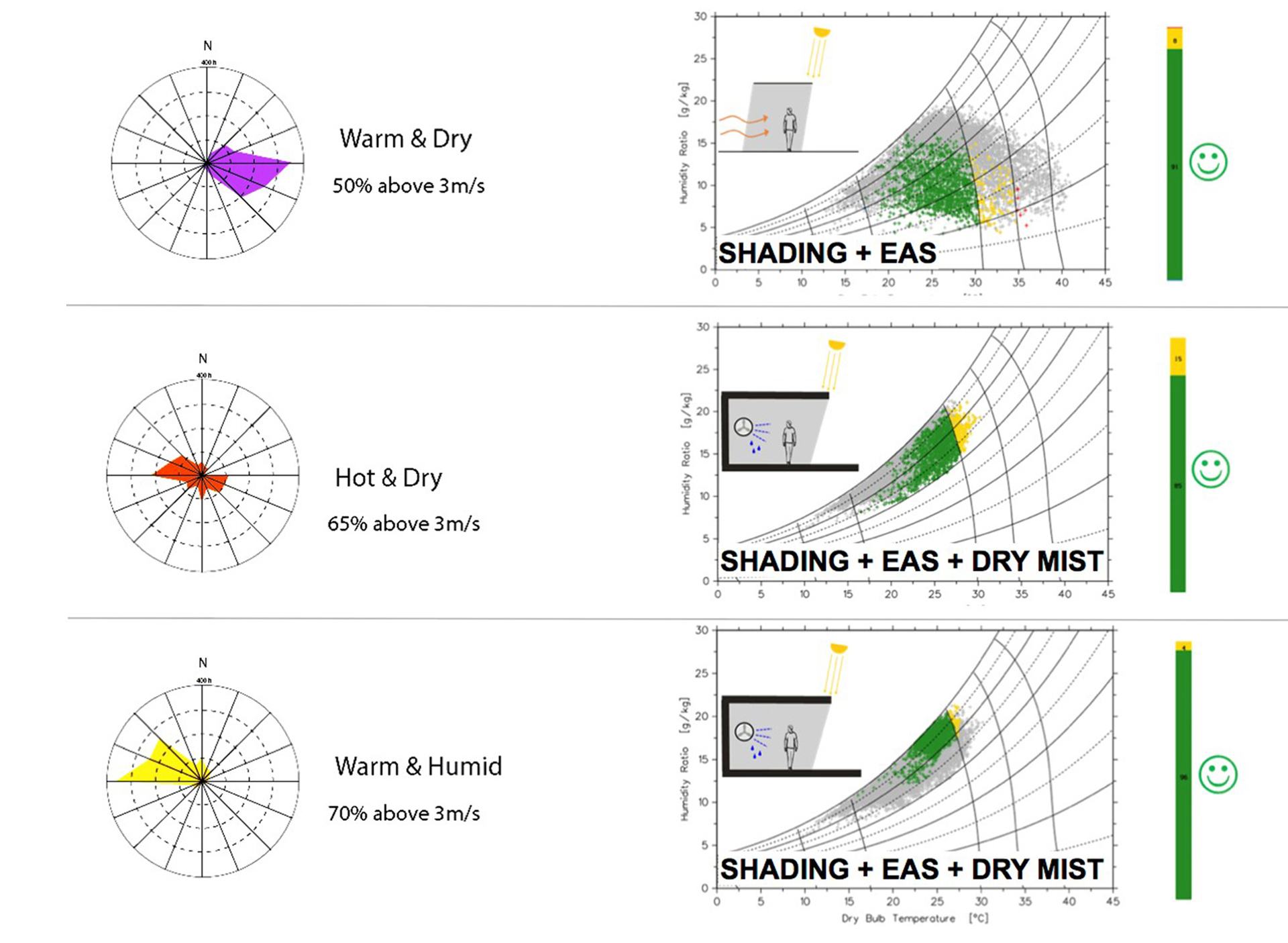
The prevailing climate can be divided into three seasons—hot and dry, warm and dry, and warm and humid. To ensure outdoor comfort, the design incorporates dry-mist fans. These are operated during the hot and warm-humid seasons, ensuring that the courtyard can be comfortably used year-round. The dry-mist fans do not produce a perceptibly damp mist, as the droplets are so fine that people do not perceive them as wet. The cooling effect results from the adiabatic evaporation of water in the air. Flow simulations based on available wind data allowed for optimal planning of the fans’ orientation and placement.
Initially, a field study was conducted in a small test area to verify whether the installed units could achieve the desired improvement in comfort. The results not only confirmed the initial assumptions but also demonstrated high user acceptance. The study served as the basis for extending the design to the entire courtyard area, which includes approximately 100 dry-mist fans.
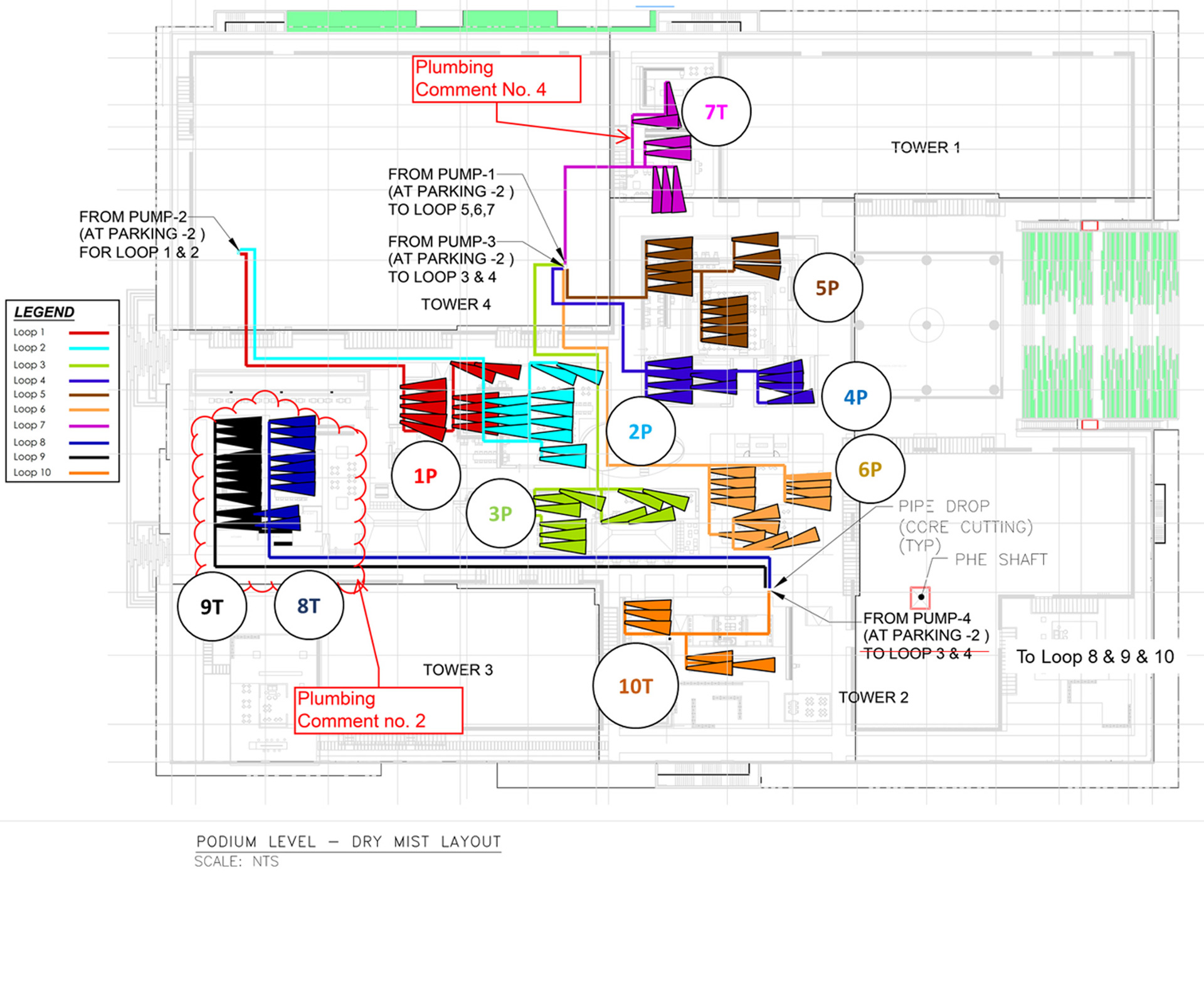
The system is divided into ten zones (loops), which allow for separate and time-differentiated control of individual courtyard areas. Ultra-pure water is used for operation; this water is further filtered and UV-disinfected in four pumping stations. It is then pressurized to an operating pressure of approximately 80 bar using high-pressure pumps. Solenoid valves control the respective fan loops, while pressure relief valves prevent dripping when the system is shut down. The entire system is controlled via a central control panel.
After installing and fine-tuning the units and their associated sensors, measurements of the climatic conditions were also conducted. These measurements confirmed our assumptions. A reduction in the UTCI (Universal Thermal Climate Index) of 6 K was observed, resulting in a thermally comfortable range without significant heat stress.
In addition to the technical cooling system, passive measures contribute to the microclimatic quality of the courtyard. Vegetation supports cooling through its natural evapotranspiration, while shading and architectural elements reduce solar heat gain. Overall, it is clear that the combination of architectural design and targeted technical measures enables an effective and sustainable improvement in thermal comfort. Through the analysis of climatic conditions and targeted adjustments, a concept has been developed that ensures comfortable year-round use as an outdoor cafeteria.
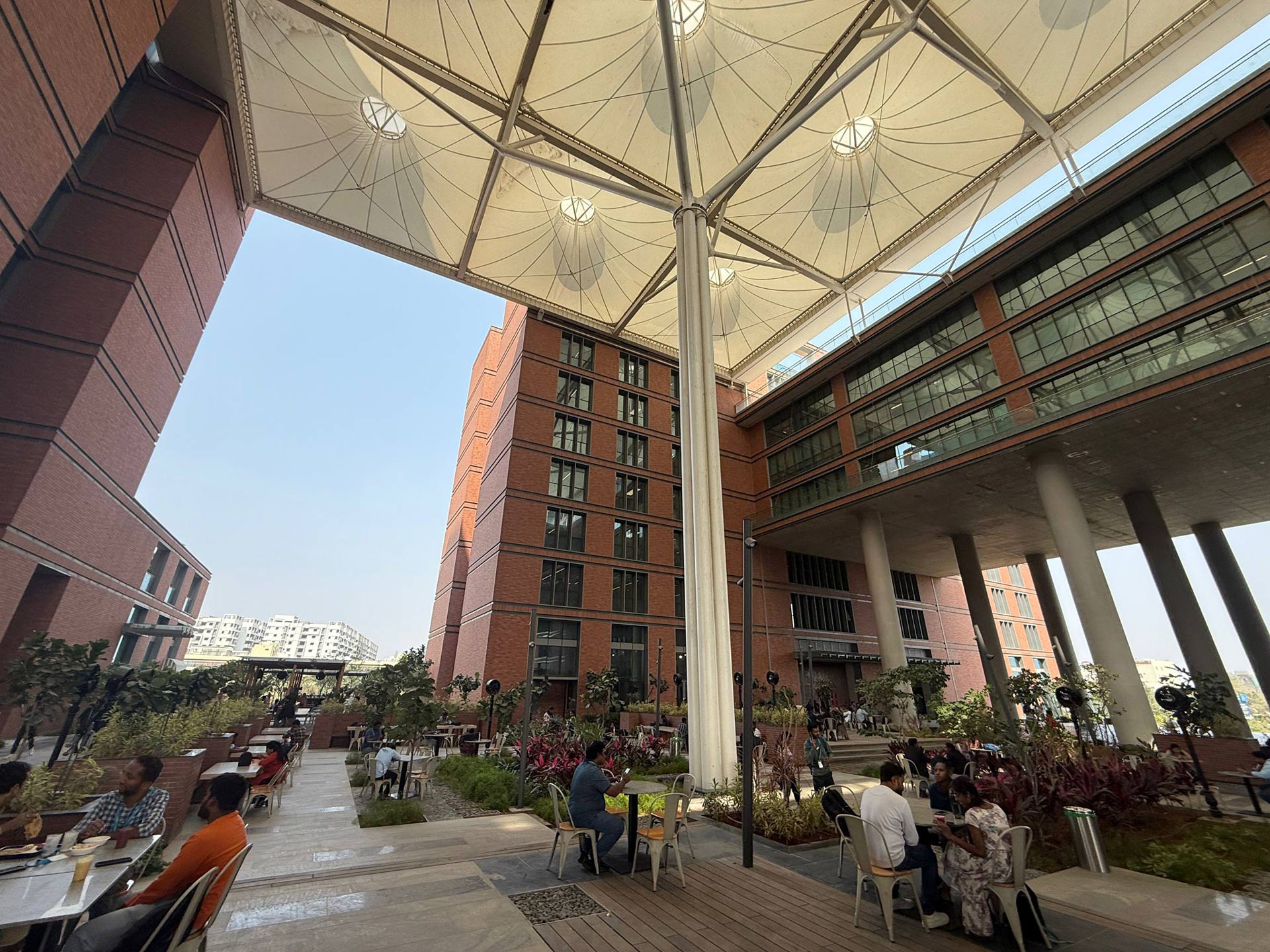
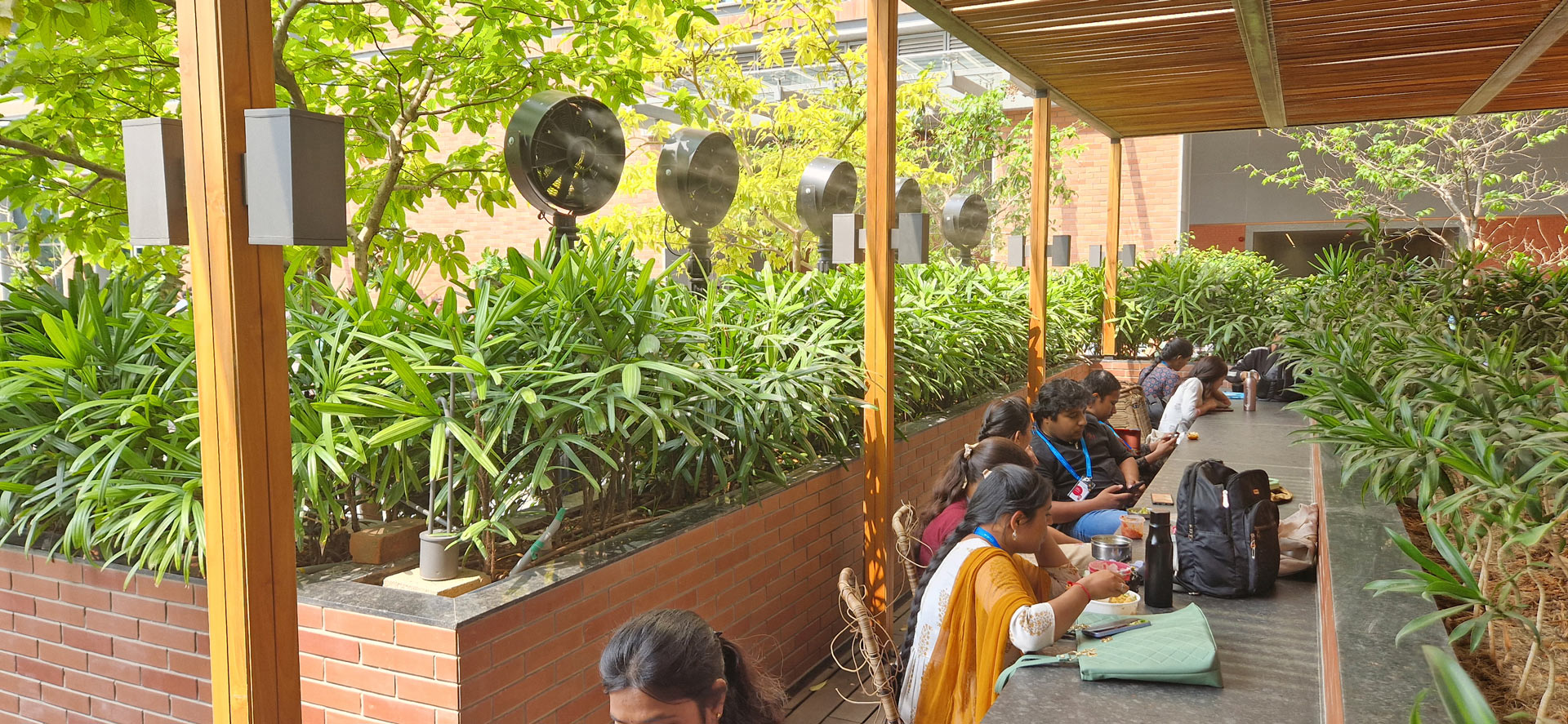
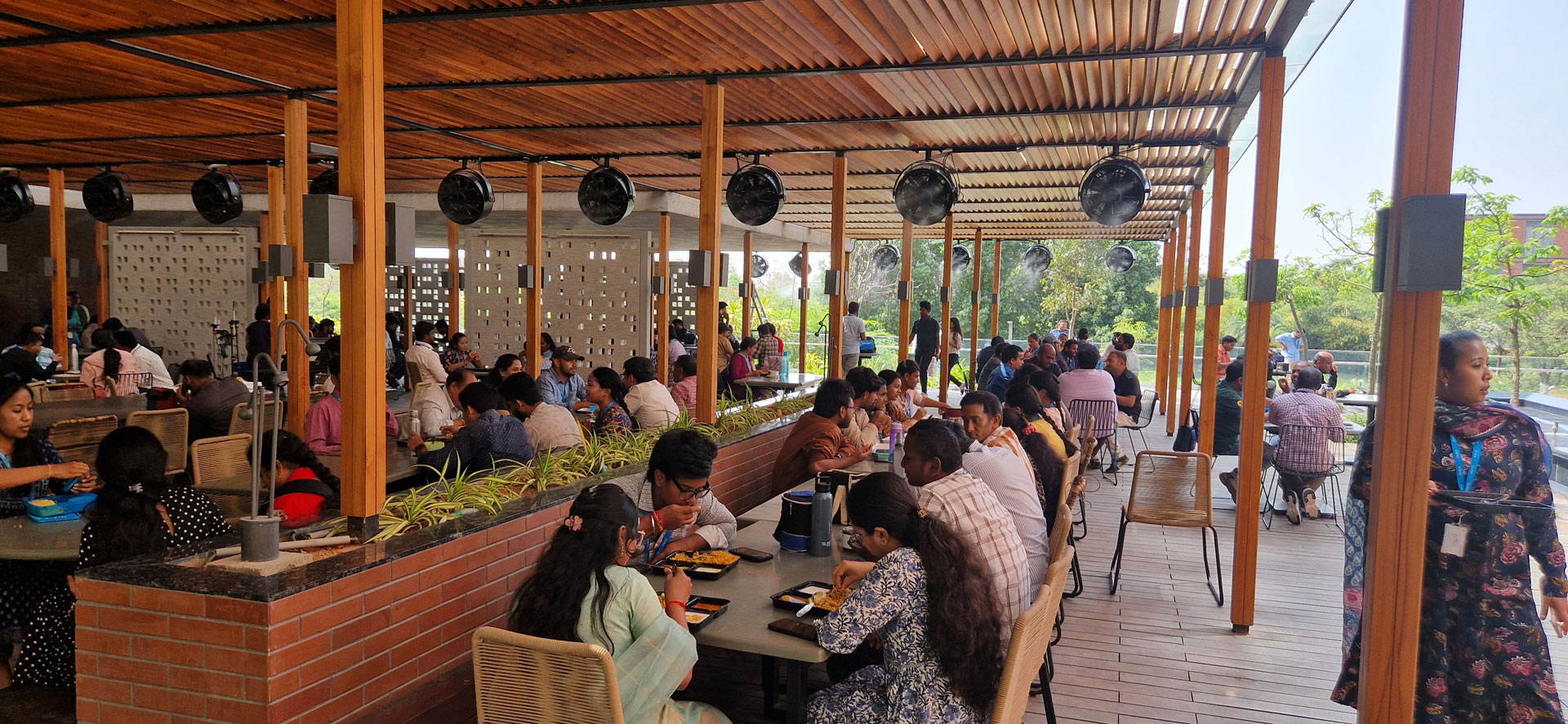
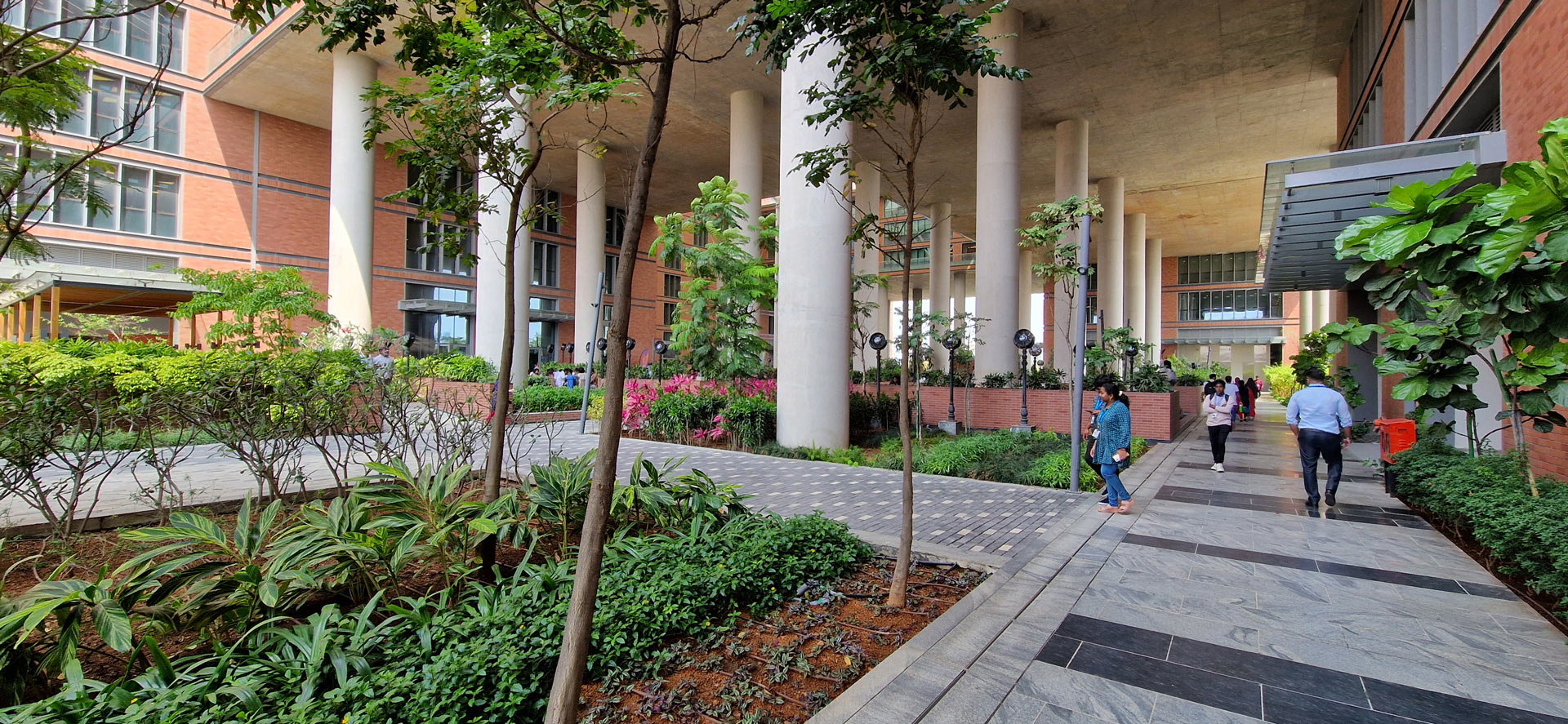
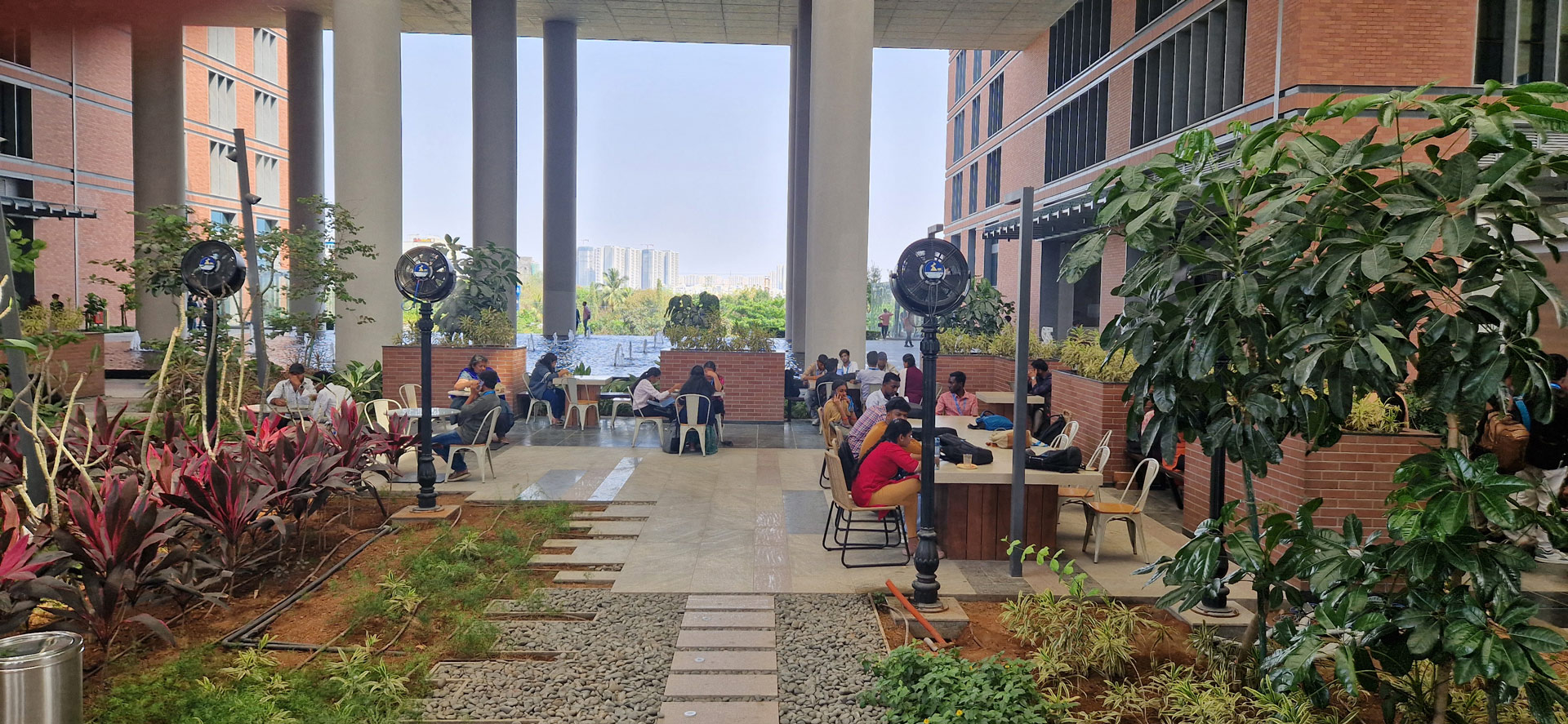
Outdoor restaurant – excellent outdoor comfort all year.