George Brown College – Limberlost Place, Toronto, ON, Canada
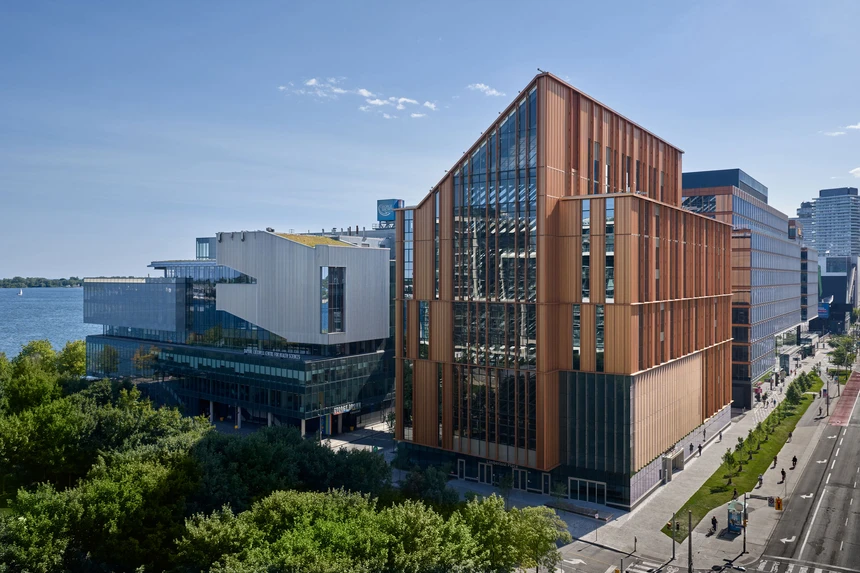
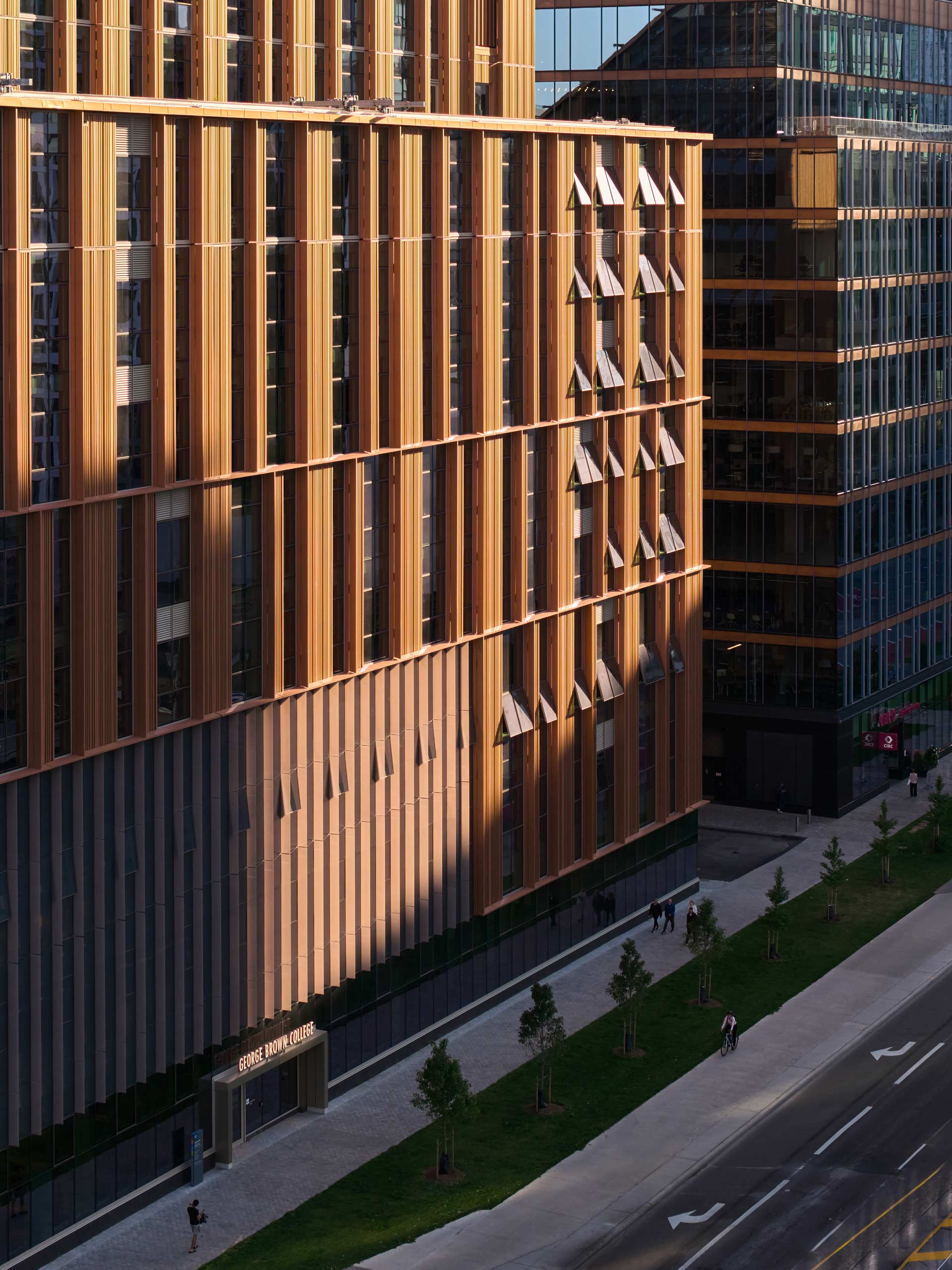
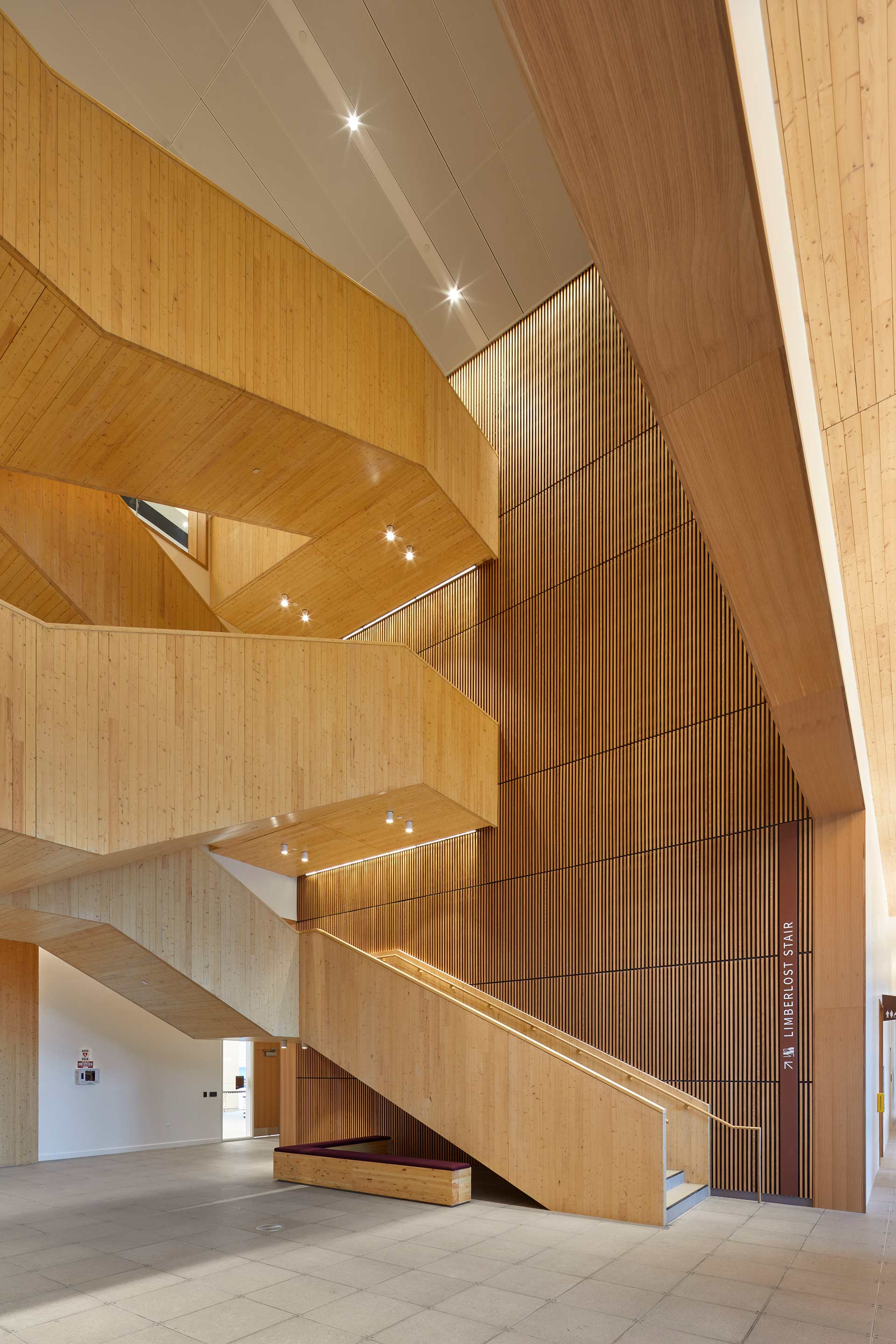
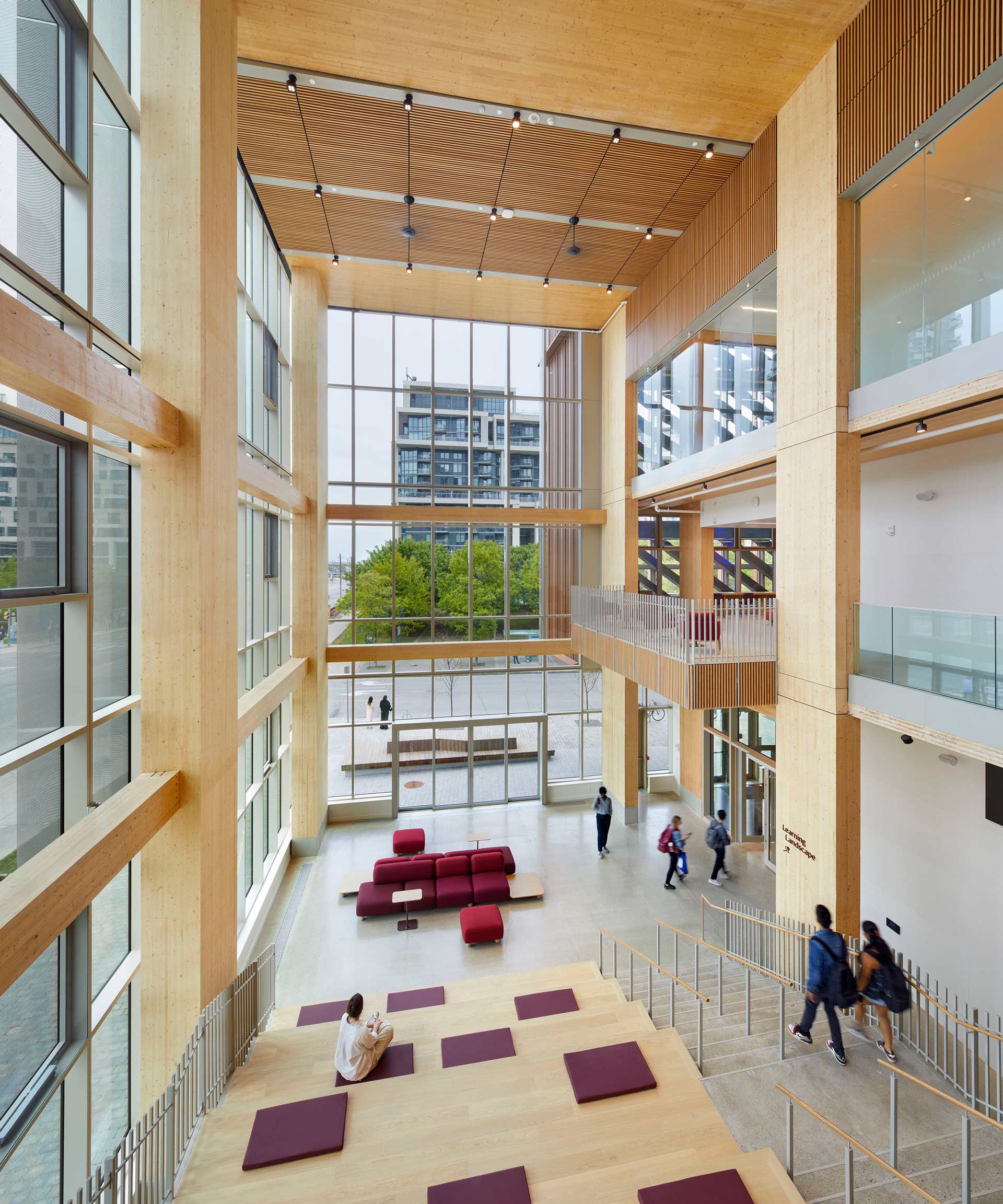
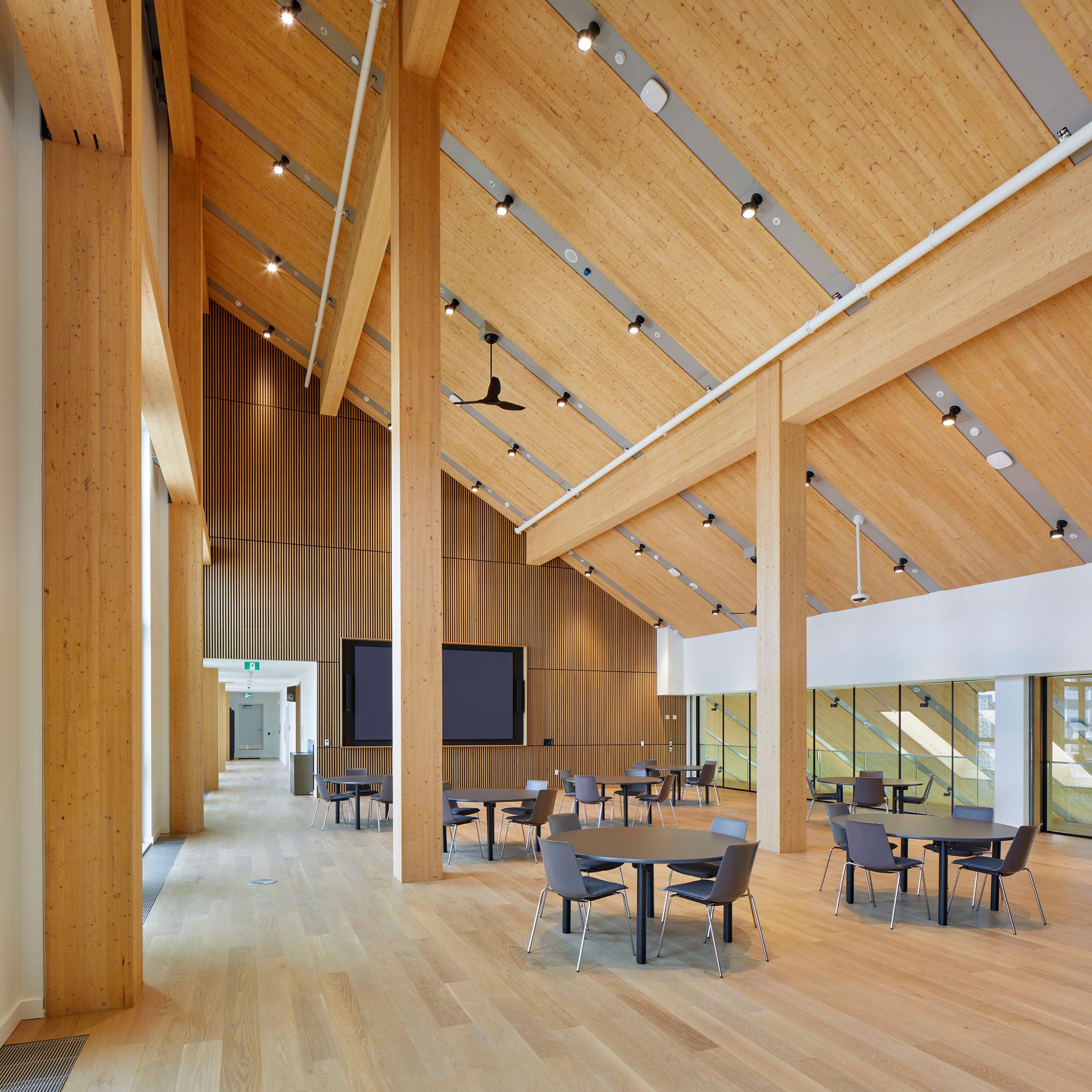
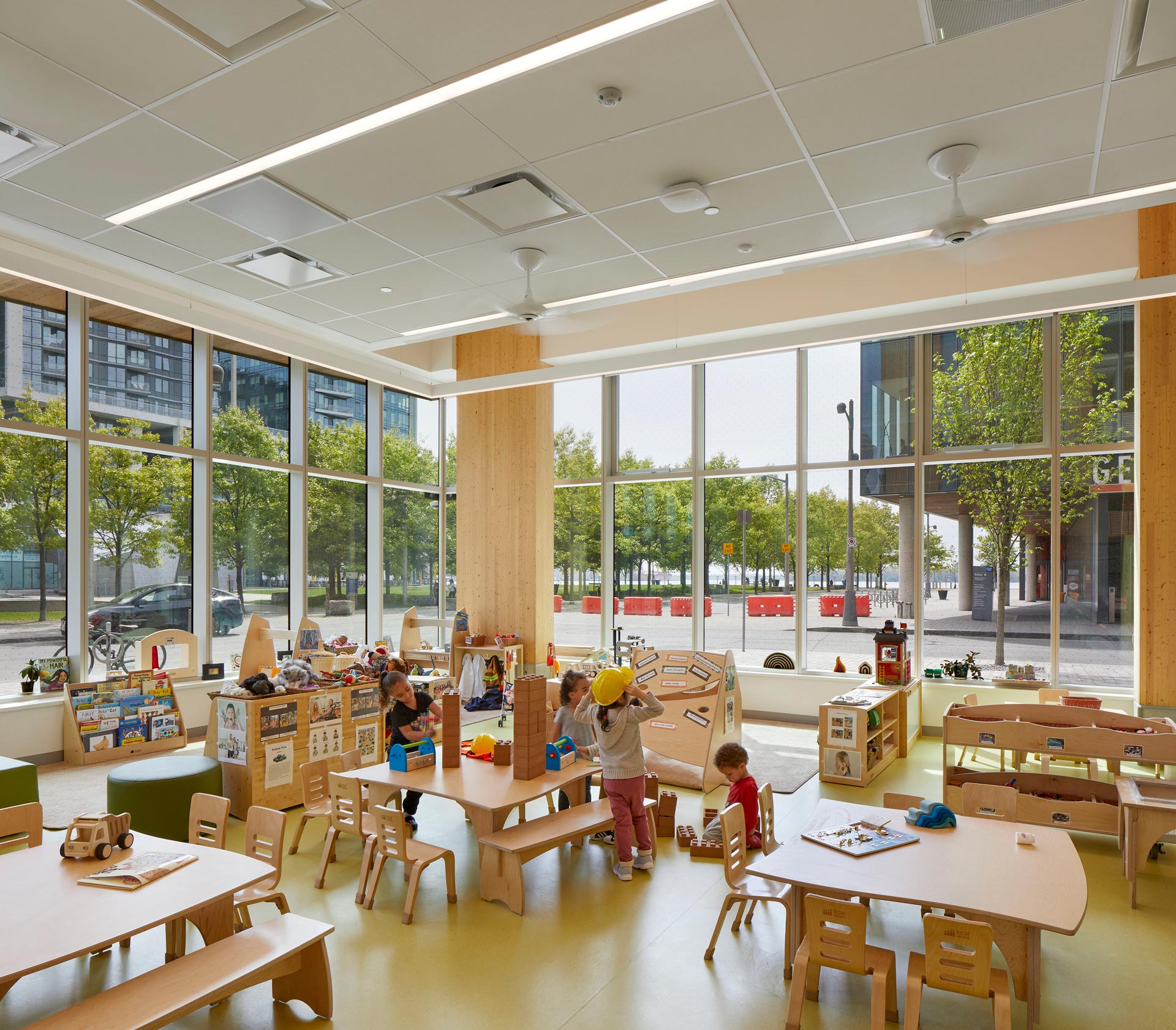
Limberlost Place is a ten-storey academic building housing George Brown College’s School of Architectural Studies. It's Ontario’s first mass-timber, low-carbon institutional building. The building brings together a diverse mix of classrooms, an athletic centre, childcare- and event facilities, offering students and researchers a hands-on environment to design, build, and study climate-friendly buildings.
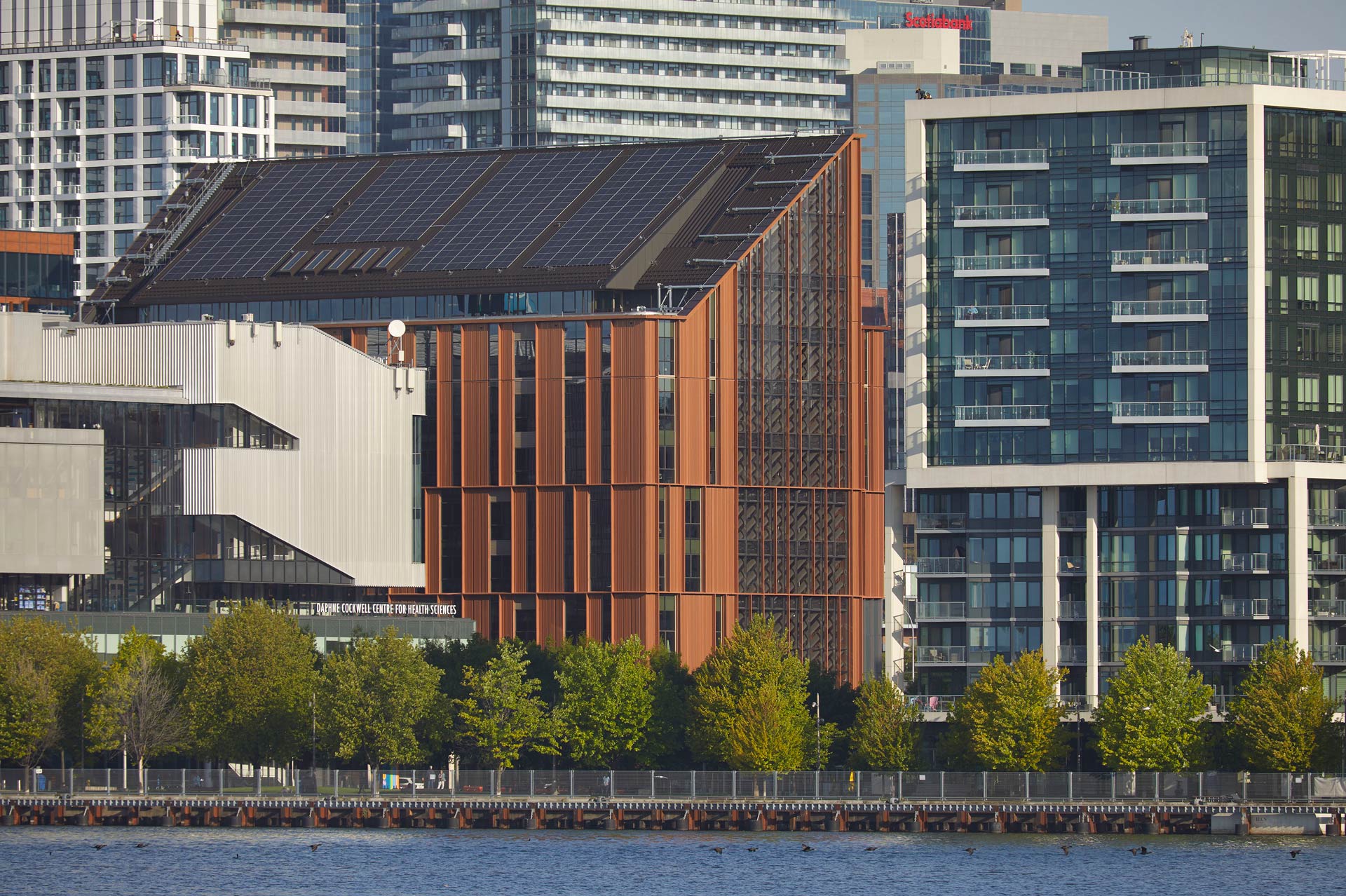
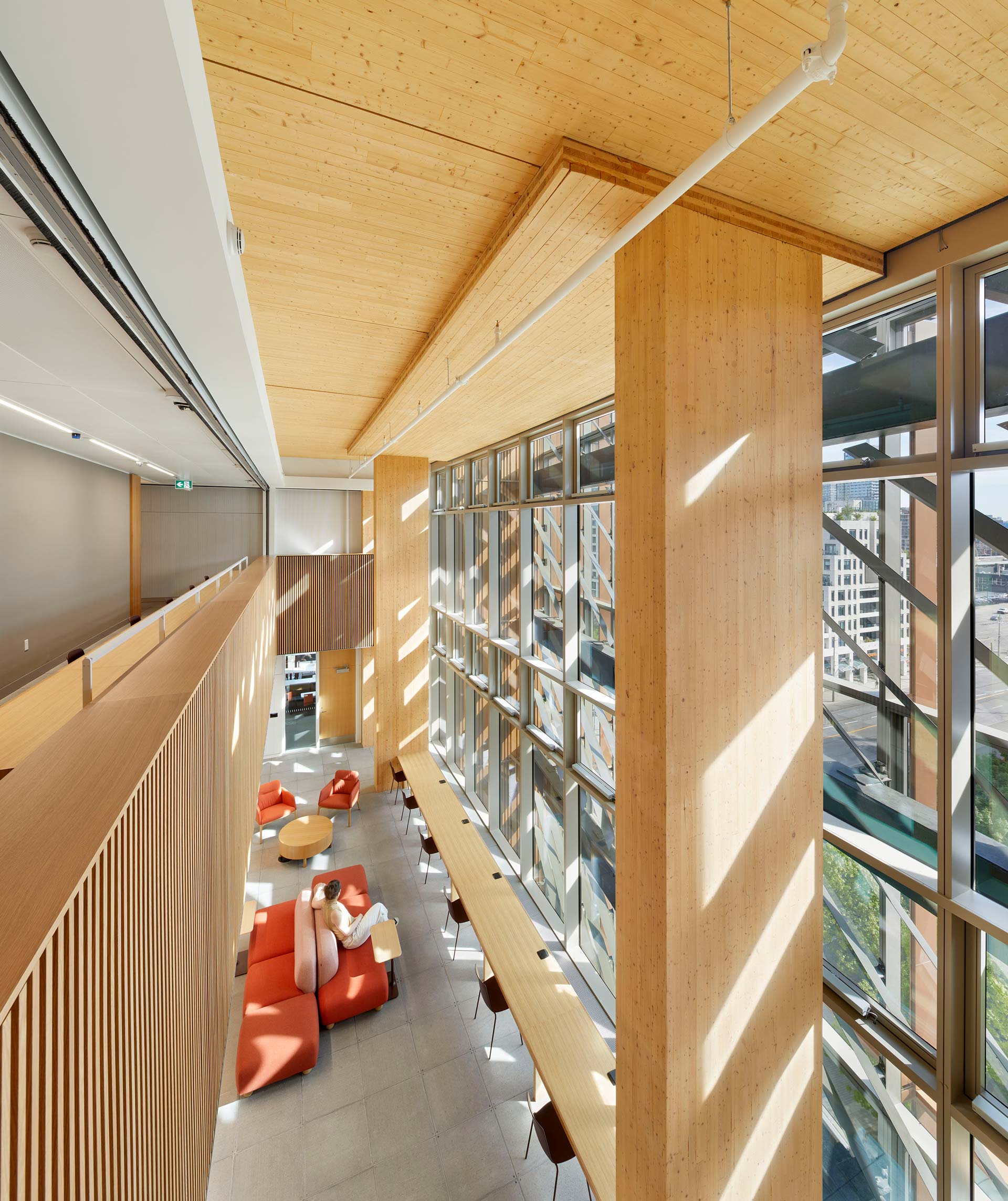
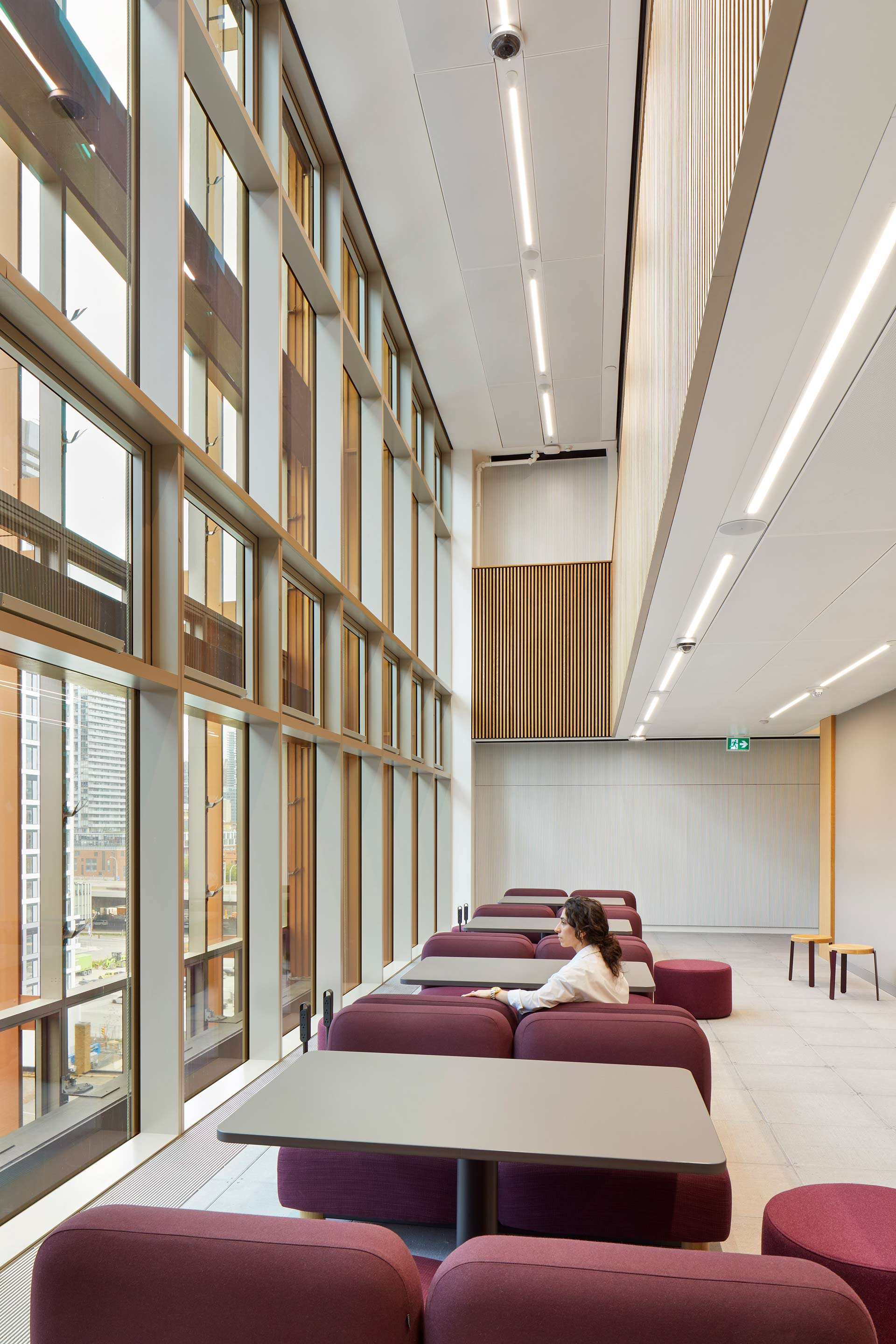
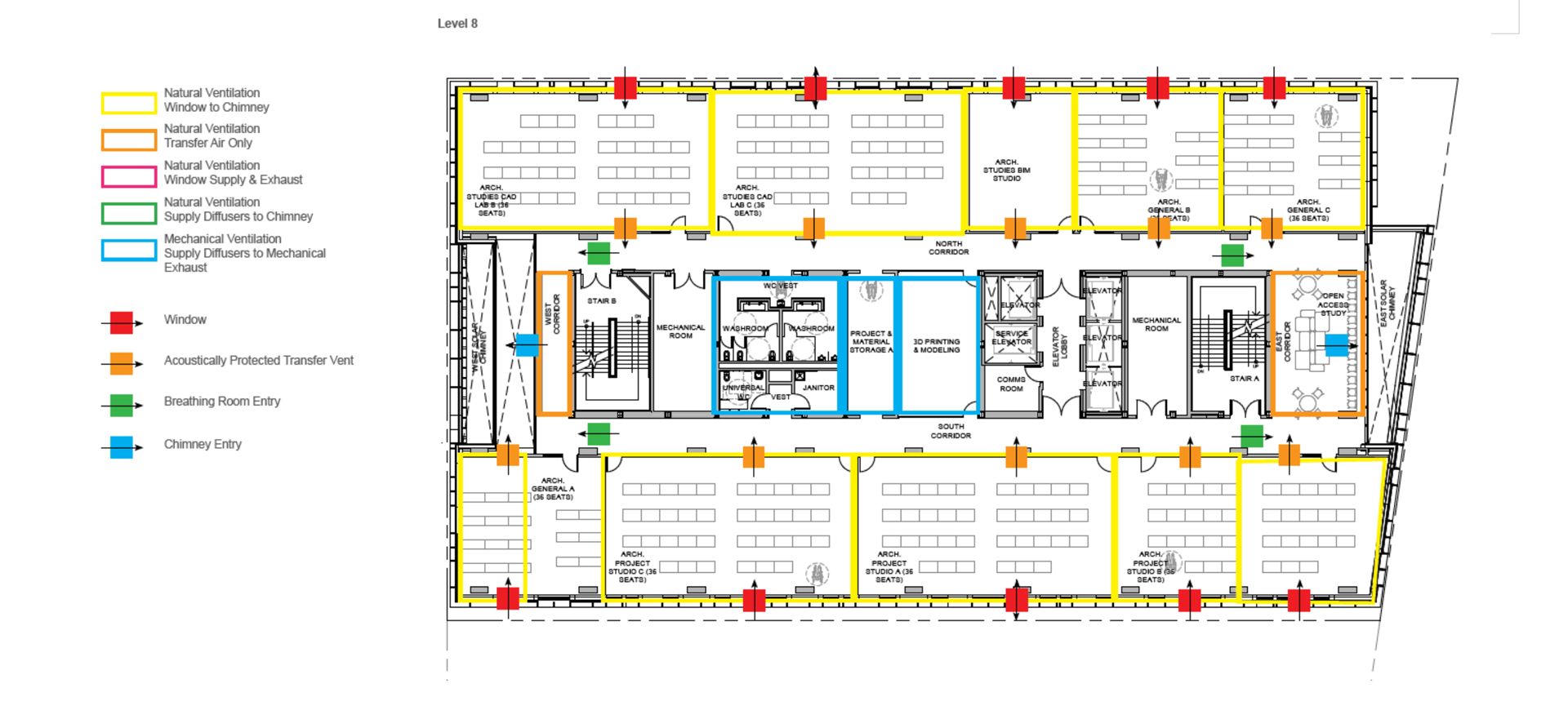
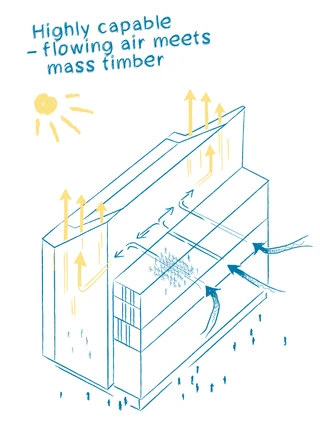
Transsolar worked collaboratively with the design team to develop a climate-responsive façade with an integrated ventilation concept that promotes natural airflow and daylight throughout the building. Central to this strategy are the distinctive double-height Breathing Rooms on each classroom level, which are paired with twin solar chimneys. Together, they enable natural ventilation, daylight, and views, while also creating a vertical connection that unifies the entire building.
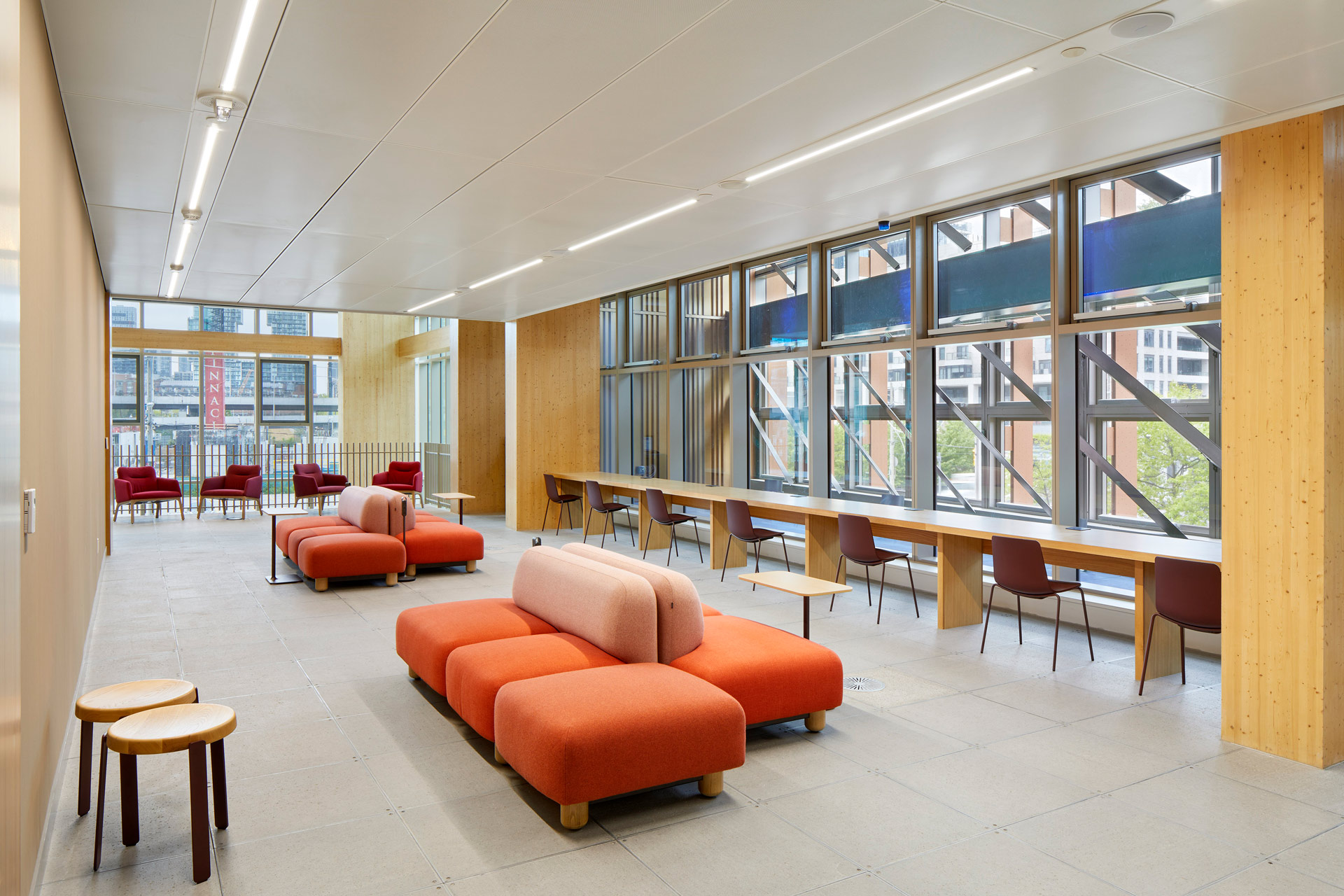
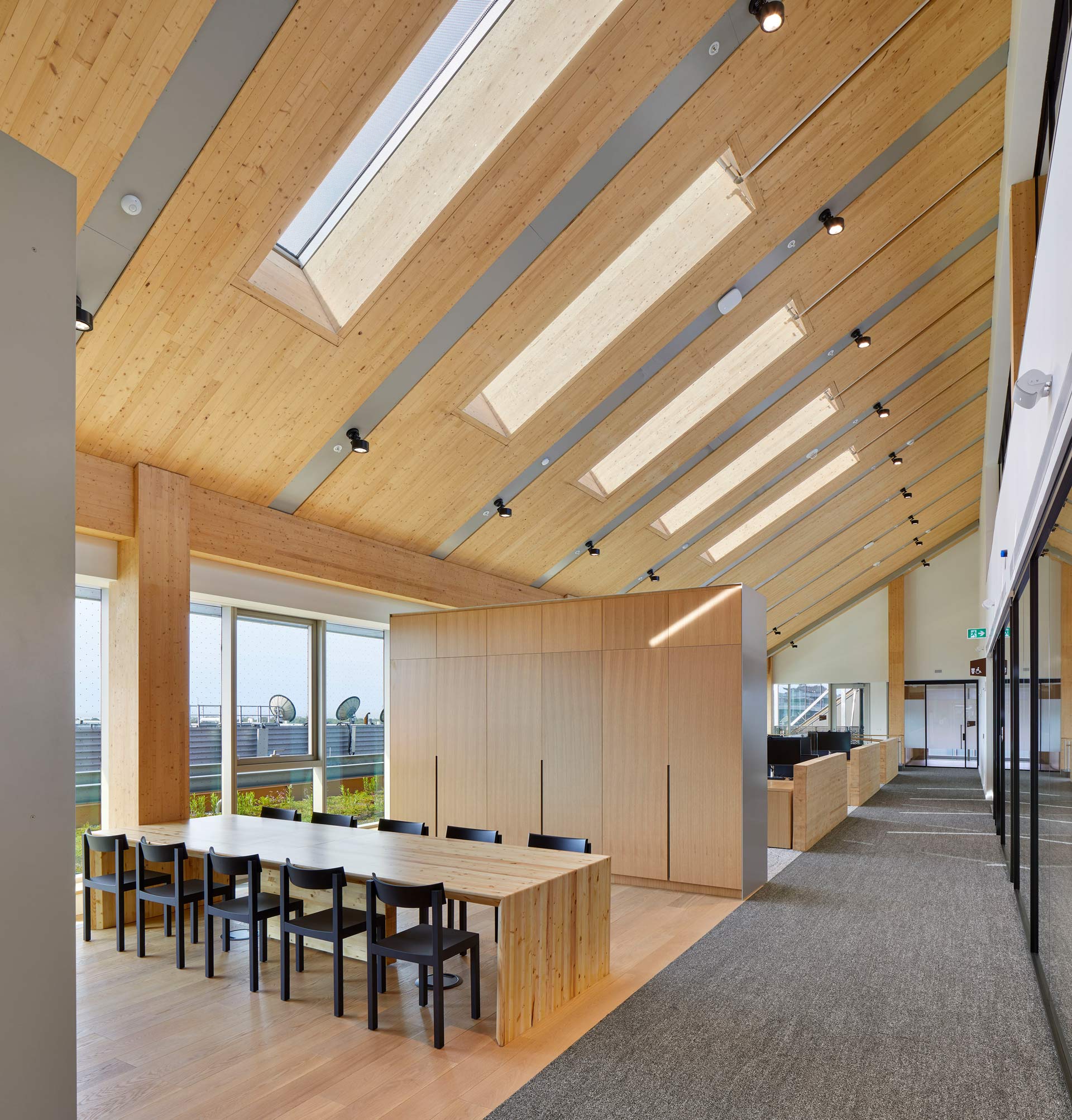
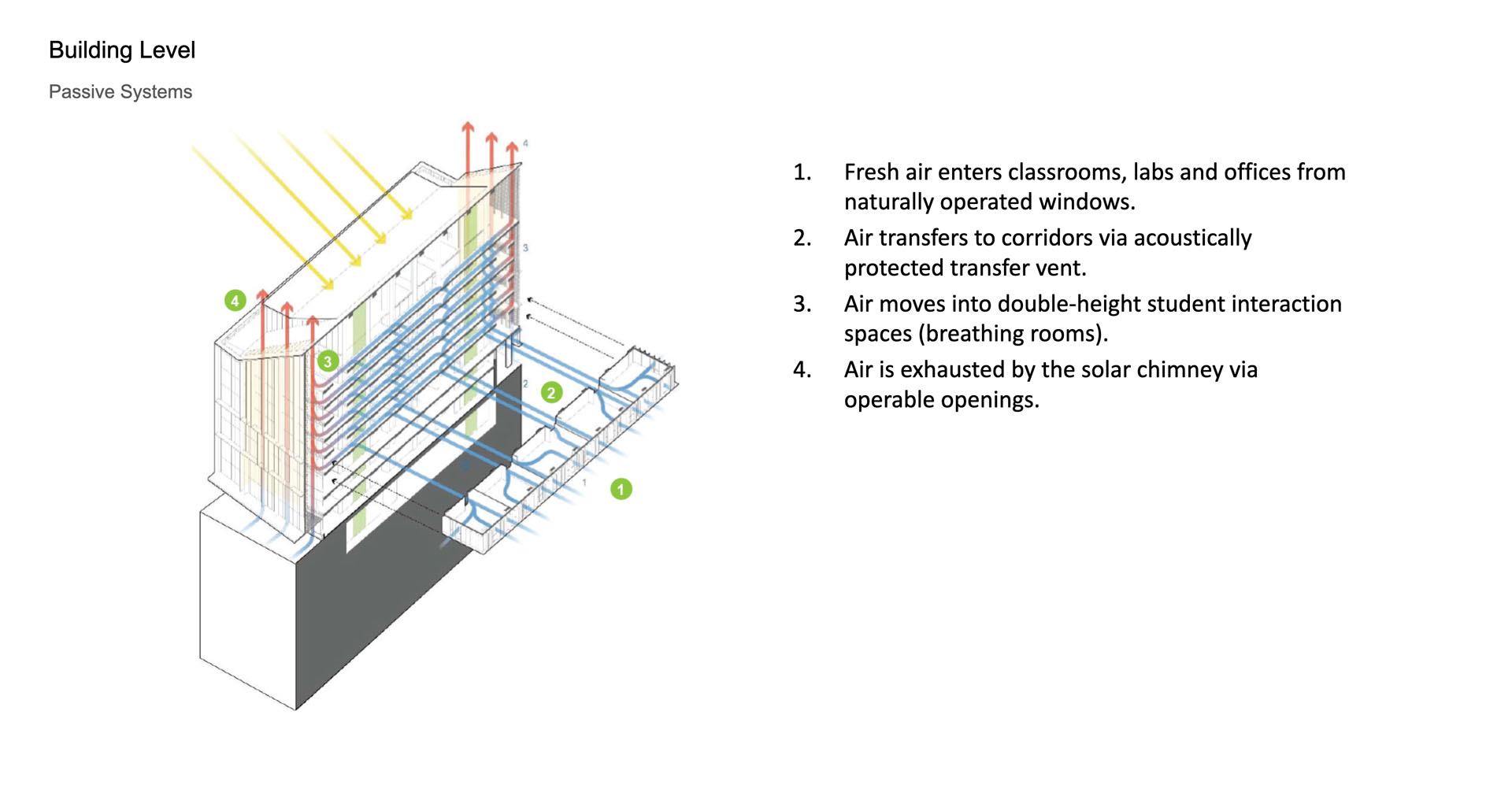
The building’s solar chimneys use the stack effect to move air through the building, reducing the need for mechanical ventilation. Positioned on the east and west sides, the chimneys rise above the roofline to create sufficient height for warm air to naturally rise and escape. The chimneys rise to a steeply pitched rooftop on the south side, which not only shapes the building’s form but also provides an optimal angle for photovoltaic panels. Their glass construction captures solar heat, which drives airflow upward and helps ventilate the interior spaces.
Each chimney consists of two layers of glass with adjustable vents at the top and bottom. Bronze-toned internal shelves absorb heat while limiting direct solar gain inside the building. Depending on the season, the chimneys operate in different modes.
In winter, the vents remain closed so the warm air trapped inside the chimney acts as an insulating layer. In summer, exterior vents open and the sun heats the air inside the chimney, creating an upward draft that helps draw heat away from the façade.
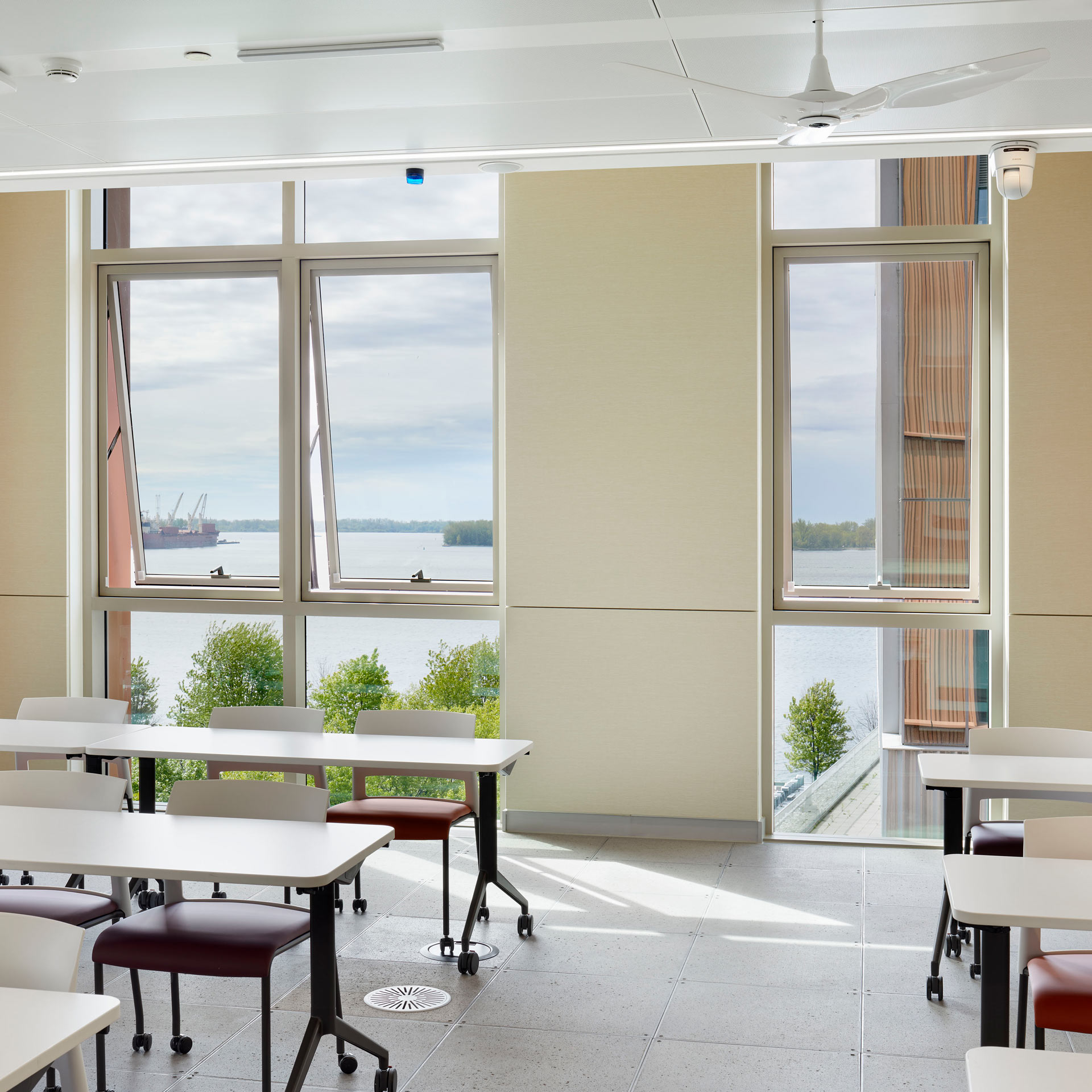
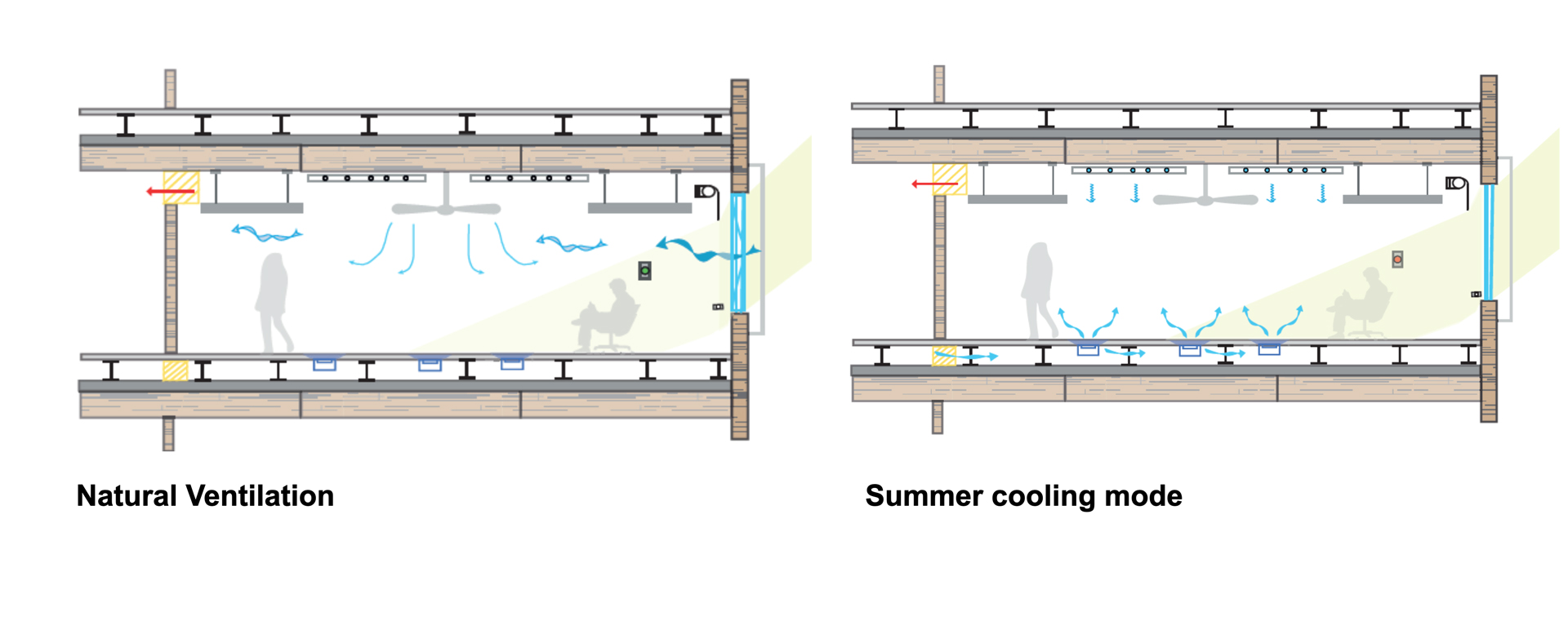
During spring and fall, the building switches to full natural ventilation. Warm, stale air from classrooms rises into the double-height Breathing Rooms and is pulled up through the chimneys, while fresh outdoor air enters through operable windows. This process naturally ventilates and connects the building’s spaces, creating a comfortable indoor environment with minimal energy use.
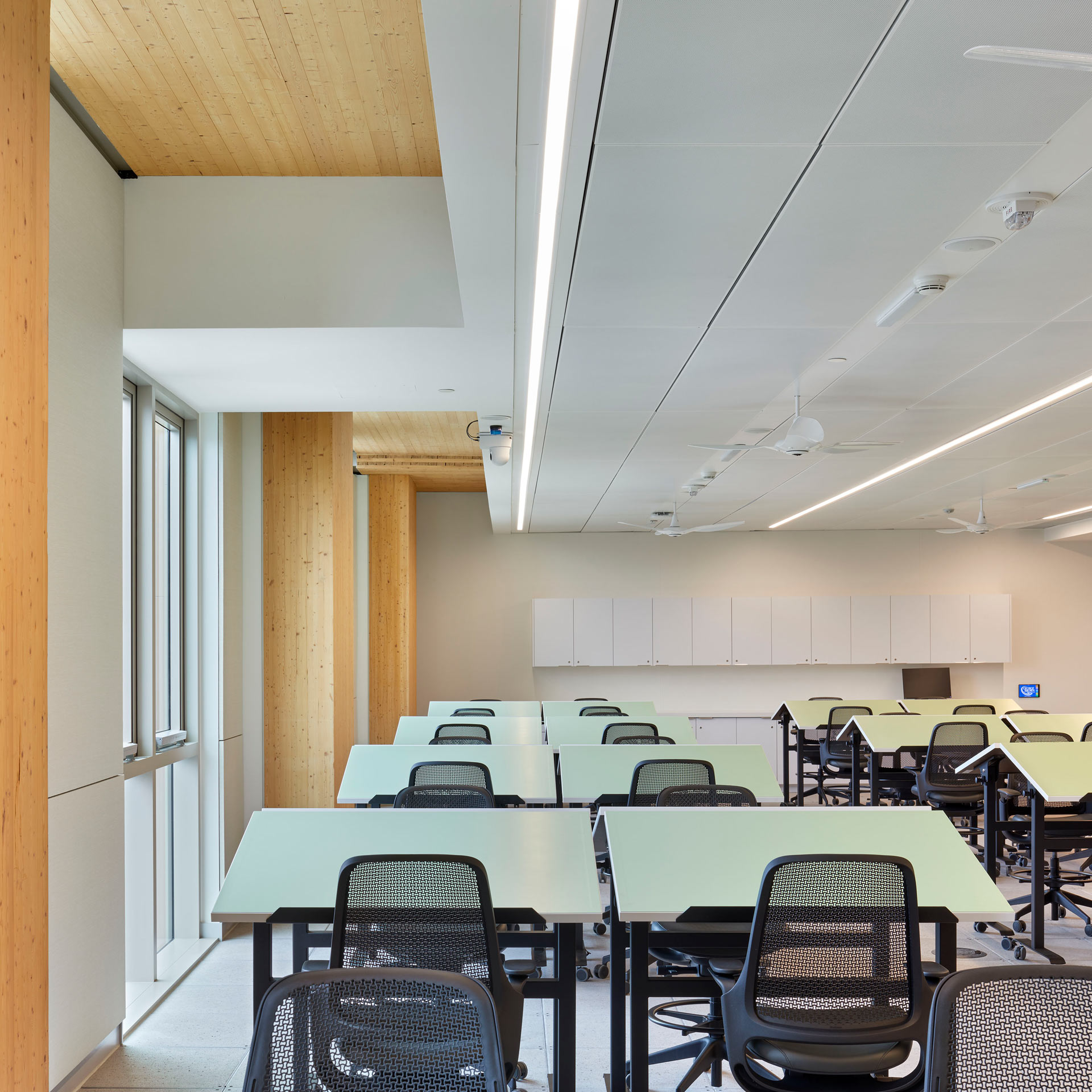
The building incorporates raised floors to support mechanical ventilation, while radiant ceiling panels provide heating and cooling. Instead of a centralized HVAC system, each floor is equipped with two energy-recovery ventilators (ERVs). In active mode, fresh air is delivered into the plenum beneath the raised floors, and room vents automatically open when spaces are occupied, distributing air efficiently throughout the building while the radiant panels maintain comfortable temperatures.
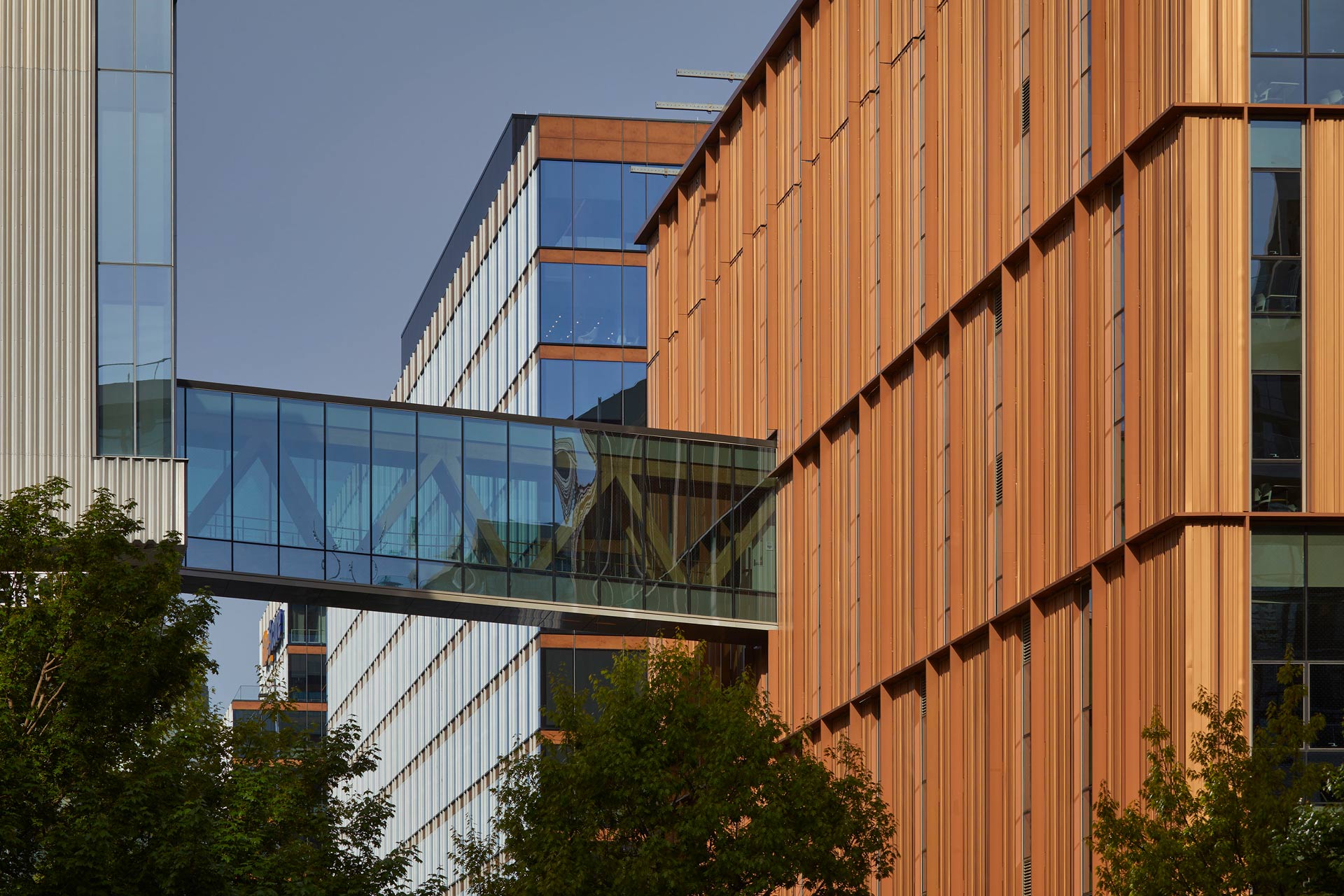
Limberlost Place uses a pioneering approach to the mass timber structure and prefabricated facade that saves time and materials, ensures high-quality control, all within a compact, efficient footprint that advances a low-carbon future.
The project achieves Tier 4 of the Toronto Green Standard for energy use intensity, thermal energy demand, and greenhouse gas emissions. The predicted energy use intensity (EUI) is 57.1 kWh/m², supported by connection to the Enwave district energy system, which provides highly efficient heating and cooling.
2024 CTBUH Innovation Award 2024 Award of Excellence
2024 CTBUH Structure Award 2024 Award of Excellence
2023 Royal Architectural Institute of Canada (RAIC) Research and Innovation in Architecture Award!
2019 Azure Magazine Award Unbuilt Buildings
2019 MIPIM and Architectural Review Future Project Award – Sustainability Prize
2018 Rethinking the Future, Architecture + Construction Design Award – Institutional Concept
2018 Canadian Architect Award of Excellence